A cordless cellular shade that won’t retract can leave your window covered and make it difficult to control natural light and privacy. As one of the most popular window coverings, this style offers major benefits. For instance, you will enjoy their attractive look and variety of décor styles and they are much safer because they lack the entangled cords that can pose choking hazards to pets or children
However, even with your best efforts to keep the blinds sleek, it’s easy to run into problems with various components due to age or heavy wear and tear.
Whether your honeycomb blinds are stuck down, won’t go up fully, or stop halfway, the issue may involve the spring-loaded lift mechanism, misaligned fabric, or lost tension inside the shade.
The good news is that you may be able to fix cordless cellular shades that won’t go up without replacing the entire window covering.
In this guide, you’ll learn how to troubleshoot a stuck shade, reset its lift mechanism, correct uneven movement and identify when a repair or replacement is necessary. We’ll also explain what to check before attempting a fix, since the correct reset procedure varies by manufacturer and model.
Why Won’t My Cordless Cellular Shade Retract?
A cordless cellular shade uses an internal lifting mechanism to raise, lower and hold the shade at your preferred height. When you lift the bottom rail, the mechanism manages the internal lift cords and spring tension, allowing you to move the shade upward.
If your cordless cellular shade will not retract, the problem usually involves the spring mechanism, lift cords, mounting hardware, or fabric.
So, why won’t your cordless cellular shade retract? Check the following:
The Internal Spring Mechanism Has Lost Tension
Most manually operated cordless cellular shades use a spring-assisted lifting mechanism. The spring helps counterbalance the shade’s weight, allowing you to raise it without pulling an external cord.
Over time, the spring mechanism may lose tension or become temporarily disengaged. This can happen if the shade stays in one position for an extended period or is operated too quickly.
You may notice that your cordless cellular shade will not go up even when you lift the bottom rail. The shade may also rise partially before sliding back down.
In some cases, the internal spring simply needs to be reactivated. Lowering the shade completely and raising it slowly can restore normal operation.
However, a damaged or worn spring may require professional repair or replacement of the lifting mechanism.
The Internal Lift Cords Are Tangled
Cordless cellular shades still contain internal cords, even though they do not have an exposed operating cord.
These lift cords run through the honeycomb fabric and connect to the lifting mechanism inside the headrail. They help raise the bottom rail evenly when you operate the shade.
If a lift cord becomes tangled, twisted, or displaced from its spool, the shade may stop moving.
You might notice that the shade gets stuck halfway up, refuses to lower completely, or rises unevenly.
A tangled cord can also prevent the spring mechanism from working properly. This is why repeatedly pulling or pushing the shade may make the problem worse.
The Shade Has Been Left in One Position for Too Long
Cordless cellular shades can develop operating problems when they remain fully raised or lowered for extended periods.
When a fabric shade stays lowered, its honeycomb cells may relax or slightly change shape. This can make the shade feel heavier or more resistant when you try to raise it.
Similarly, a shade that remains fully raised may develop a tendency to rise too quickly or resist lowering.
This does not necessarily mean the lifting mechanism is damaged. The fabric may simply need to return to its normal shape through regular operation.
Manufacturers recommend operating some cordless cellular shades regularly to keep movement smooth.
The Bottom Rail Is Uneven
The bottom rail is the horizontal bar at the bottom of your cellular shade. You use it to raise and lower the window covering.
If one side of the bottom rail is higher than the other, the shade may become difficult to operate.
An uneven bottom rail can result from lifting the shade from one side, incorrect installation, or uneven tension in the internal lift cords.
You may notice that one side rises normally while the other remains lower. The shade may also become stuck when you attempt to raise it.
The best way to prevent this problem is to operate the shade from the center of the bottom rail. Wider shades may require both hands to maintain even pressure.
The Mounting Brackets Are Misaligned
Cordless cellular shades rely on correctly installed mounting brackets to support the headrail and allow the lifting mechanism to operate smoothly.
If the brackets are not level, the headrail may sit at an angle. This can cause the shade to hang unevenly or rub against the window frame.
A bracket that is too tight or incorrectly positioned can also interfere with the lifting mechanism.
If your cordless cellular shade worked properly before installation adjustments or window renovations, check whether the headrail is still sitting correctly in its brackets.
The Honeycomb Fabric Is Damaged or Trapped
Cellular shades use folded fabric arranged into honeycomb-shaped cells. These cells provide insulation while allowing the shade to fold neatly when raised.
However, the fabric can become trapped between the bottom rail and the window frame. Dust, debris, or damaged folds can also interfere with movement.
If the shade has been forced upward while the fabric was caught, the folds may become distorted.
Carefully inspect the fabric to determine whether an obstruction, rather than the lifting mechanism, is causing the problem.
The Shade Is Too Heavy for Its Lifting Mechanism
The lifting mechanism is designed to support a specific shade size and weight.
If the shade is incorrectly sized, fitted with unsuitable replacement fabric, or has accumulated excessive weight, the spring may struggle to raise it.
This problem is more likely to occur with larger shades or after modifications that change the original weight.
If the shade has become noticeably heavier or the lifting mechanism no longer holds it in place, contact the manufacturer before adjusting the spring.
How to Fix a Cordless Cellular Shade That Won’t Retract
Before you begin, confirm whether your window treatment is a manually operated cordless cellular shade or a motorized cellular shade.
The instructions below apply primarily to manual cordless cellular shades. Motorized models require different troubleshooting steps.
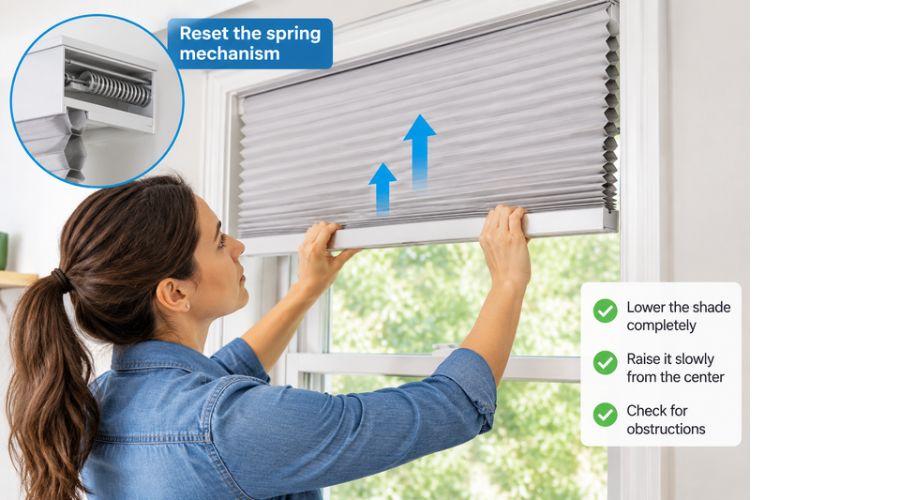
Reset the Cordless Spring Mechanism
Resetting the internal spring mechanism is one of the first things to try when your cordless cellular shade will not retract.
A reset can help restore the balance between spring tension and the shade’s weight.
Follow these steps:
- Stand directly in front of the window and hold the bottom rail with both hands.
- Gently pull the shade downward until it reaches its lowest position.
- Make sure the bottom rail is level and the fabric is not trapped.
- Slowly push the bottom rail upward toward the headrail.
- Continue raising the shade in a smooth, controlled motion.
- Lower and raise the shade several times to check whether it operates normally.
If the shade remains stuck, consult the manufacturer’s troubleshooting instructions. Some models require a specific reset procedure, such as a slight downward pull or a gentle pull at an angle.
Avoid forcing the shade upward or pulling it sharply. Excessive force can damage the internal lift cords or spring mechanism.
Lower the Shade Completely and Reset the Tension
If your cordless cellular shade rises unevenly or refuses to stay in position, the lifting mechanism may need to be reset.
This procedure is particularly useful when the shade has been left fully lowered for a long time.
Start by lowering the shade completely. Hold the bottom rail in the middle and gently pull it downward until it reaches its normal stopping point.
Depending on the manufacturer, you may need to apply a few gentle tugs to help reset the tension device.
Next, raise the shade slowly and check whether both sides move evenly.
If the shade still does not operate correctly, repeat the process once or twice.
Do not continue pulling if the shade feels unusually stiff or if you hear a grinding noise. These symptoms may indicate a damaged internal component.
Check Whether the Bottom Rail Is Level
An uneven bottom rail can make your cordless cellular shade difficult to retract.
If one side is higher than the other, the internal lift cords may not be moving evenly.
To correct the problem, lower the shade completely and inspect the bottom rail.
Hold the rail near the center and raise it slowly, keeping both hands at an equal height.
Avoid lifting one side higher than the other, as this can increase the uneven tension.
If the shade remains crooked, check whether the mounting brackets are level and whether the headrail is properly seated.
Some cellular shades allow you to reset the lifting mechanism by fully lowering the shade and then raising it evenly. Others may require professional adjustment.
Inspect the Mounting Brackets
If your cordless cellular shade will not retract despite resetting the spring mechanism, inspect the mounting brackets.
A poorly positioned bracket can cause the headrail to sit unevenly or prevent the shade from moving freely.
Begin by lowering the shade as far as it will go.
Check whether the headrail is securely attached to the brackets and sits level across the window.
Look for signs of movement, loose screws, or brackets that have shifted out of position.
If the brackets are loose, tighten the mounting screws carefully.
If the headrail appears to be under pressure, consult the installation instructions before removing it.
Avoid dismantling the headrail unnecessarily, especially if it contains a spring-loaded lifting mechanism.
Check for Trapped or Tangled Fabric
Sometimes the problem is not the lifting mechanism but the honeycomb fabric itself.
If the fabric becomes trapped between the bottom rail and the window frame, the shade may refuse to move.
Lower the shade carefully and inspect the fabric along both sides.
Look for folds that have become trapped, damaged cells, or debris that may be preventing the shade from moving freely.
If you find a trapped section, gently release it without pulling on the fabric.
For minor dust buildup, use a soft brush or a vacuum cleaner with a brush attachment.
Avoid using excessive water or harsh cleaning products, as these can damage the fabric or affect the adhesive holding the cells together.
If the fabric is torn or the honeycomb cells have separated, contact the manufacturer to determine whether the shade can be repaired.
Check the Internal Lift Cords
If the shade remains stuck after the previous steps, the internal lift cords may be tangled or displaced.
The lift cords are usually located inside the honeycomb cells and connect to the mechanism in the headrail.
A tangled cord can prevent the shade from raising or lowering smoothly.
You may notice that the shade moves unevenly, stops at a particular point, or refuses to retract completely.
Because the lift cords are part of the internal mechanism, repairing them may require removing the headrail or opening the shade.
Before attempting this repair, check the manufacturer’s instructions to determine whether the mechanism is designed to be serviced.
If you cannot identify the problem without dismantling the shade, it is safer to contact a professional blind repair service.
Contact the Manufacturer or a Professional Repair Service
If your cordless cellular shade still won’t retract after troubleshooting, the internal mechanism may be damaged.
A worn spring, broken lift cord, damaged clutch, or defective component may require replacement.
Contact the manufacturer or the retailer where you purchased the shade.
Provide the product model, approximate age, and a description of the problem.
If possible, take a photograph of the shade and its headrail to help the technician identify the correct replacement parts.
Many manufacturers provide repair instructions, replacement components, or warranty support.
If the shade is still under warranty, avoid opening the headrail or replacing internal components before contacting the manufacturer. Unauthorized repairs may affect your warranty coverage.
How to Prevent Cordless Cellular Shades from Getting Stuck
Regular maintenance can help keep your cordless cellular shades operating smoothly.
Here are some practical ways to prevent your shades from becoming stuck.
Operate the Shade Regularly
Avoid leaving your cellular shade fully raised or lowered for months at a time.
Operating the shade periodically helps maintain smooth movement and prevents the fabric from remaining compressed or stretched for too long.
Raise and lower the shade gently, allowing the lifting mechanism to move at its normal speed.
Lift the Shade from the Center
Always lift your cordless cellular shade from the middle of the bottom rail.
This helps distribute the weight evenly and reduces the risk of uneven tension in the internal lift cords.
For wide shades, use both hands to maintain balance.
Avoid Forcing the Shade
If the shade gets stuck, do not keep pulling or pushing with excessive force.
Forcing the shade can damage the spring mechanism, internal cords, or honeycomb fabric.
Instead, lower the shade gently and identify the cause of the obstruction.
Keep the Window Area Clean
Dust and debris can accumulate around the window frame and interfere with the movement of the shade.
Clean the window area regularly and inspect the fabric for trapped dirt.
Use a soft brush or vacuum attachment to remove dust from the honeycomb cells.
Check the Installation
Make sure the mounting brackets remain secure and the headrail is properly aligned.
If the shade begins to hang unevenly, check whether the brackets have shifted.
Correcting minor installation problems early can help prevent more serious operating issues.
Frequently Asked Questions
Why won’t my cordless cellular shade go up?
Your cordless cellular shade may not go up because the internal spring mechanism has lost tension, the lift cords are tangled, or the bottom rail is uneven. Start by lowering the shade completely and raising it slowly. If the problem continues, inspect the mounting brackets and contact the manufacturer.
How do I reset a cordless cellular shade?
Lower the shade completely, then raise it slowly using the bottom rail. Repeat the process a few times to help reactivate the lifting mechanism. Some models require a specific reset procedure, so check the manufacturer’s instructions before applying additional force.
Why does my cordless cellular shade go up unevenly?
An uneven shade may have misaligned mounting brackets, tangled lift cords, or uneven tension in the lifting mechanism. Lower the shade completely and raise it from the center of the bottom rail. If the problem persists, the internal mechanism may need adjustment.
Can I repair a cordless cellular shade myself?
Yes. Many common problems, such as an inactive spring mechanism, uneven bottom rail, or trapped fabric, can be corrected with simple troubleshooting. However, damaged internal springs, lift cords, or other sealed components may require professional repair.
How long do cordless cellular shades last?
The lifespan of cordless cellular shades depends on the quality of the materials, frequency of use, installation, and maintenance. Regular operation and careful handling can help extend their lifespan.
Why does my cordless cellular shade keep sliding down?
A cordless cellular shade that keeps sliding down may have insufficient spring tension or a damaged holding mechanism. Try resetting the shade according to the manufacturer’s instructions. If it continues to slide, the internal mechanism may need adjustment or replacement.
Is it worth repairing a cordless cellular shade?
Repairing a cordless cellular shade is often worthwhile if the problem involves a simple reset, loose bracket, or minor obstruction. If the fabric is damaged or the internal mechanism has failed, compare the repair cost with the price of a replacement shade.
The video below shows how to fix a cordless pleated shade
Conclusion
A cordless cellular shade that won’t retract can often be repaired without replacing the entire window treatment.
The most common causes include a spring mechanism that needs resetting, tangled internal lift cords, an uneven bottom rail, or mounting brackets that interfere with movement.
Start with simple troubleshooting by lowering the shade completely and raising it slowly. Check the bottom rail, inspect the fabric and make sure the headrail is properly installed.
If the shade still won’t retract, do not force it or dismantle the internal mechanism without the correct instructions.
Contact the manufacturer or a professional repair service if the spring, lift cords, or other internal components appear damaged.
With proper maintenance and careful operation, your cordless cellular shades can continue to provide privacy, insulation, and convenient light control for years to come.