
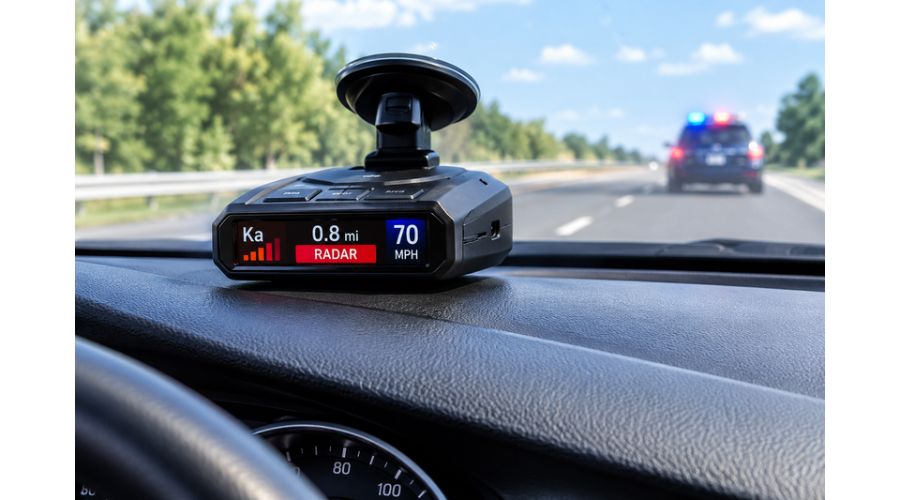
Driving on unfamiliar roads or highways can make it difficult to know when you are approaching an area monitored by police radar. Speed enforcement equipment can detect a vehicle’s speed quickly, leaving drivers with little time to respond to changing road conditions or posted speed limits.
Radar detectors help address this problem by alerting motorists to certain radar signals used by speed-monitoring devices, encouraging greater awareness behind the wheel.
However, traditional detectors often rely on power cables that can clutter the dashboard and limit installation flexibility. This is where the best cordless radar detectors come in.
These portable devices provide a cleaner setup and greater convenience, making them appealing to drivers who prefer fewer cables.
In this review, we explore the top-rated radar detectors with wide coverage, detailing the essential features and options worth considering before buying one.
Aso Read:
Best Cordless Radar Detectors of 2026 Reviews
-
Cobra RAD 490i Laser Radar Detector-Longe Range Detection and Smart Alerts
At the top of our list is the Cobra RAD 490i Laser Radar Detector. This unit is handy when you want long-range detection, faster alerts, and fewer distractions from false warnings.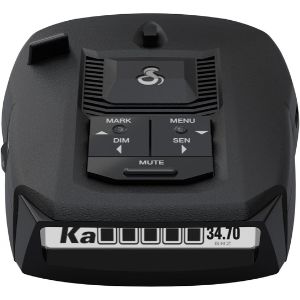
The detector has advanced IVT filtering and anti-falsing circuitry that helps reduce alerts caused by blind-spot monitoring and other vehicle safety systems. Besides, its LaserEye technology detects laser signals from both the front and rear. At the same time, Digital Signal Processing helps identify incoming signals and deliver alerts quickly to help you navigate and decide on the dangers ahead.
You can also connect to the Drive Smarter community to receive alerts shared by other drivers. Its compatibility with Apple CarPlay and Android Auto lets you view routes and interact with alerts through your vehicle’s display.
The unit also features adjustable sensitivity and filtering modes for added control, so you can tailor your radar detector to your preferences and choose how many notifications you receive while on the go, while Extreme Mode prioritizes maximum detection coverage.
With this unit, you’ll benefit from ongoing firmware updates that enhance longevity, keeping your detector up to date and ready for the road.
The model includes a USB-C power cable, adhesive windshield mount with static cling film, and a USB-C to cigarette lighter adapter, ensuring easy installation without a professional.
Pros
- Long-range radar detection with advanced false-alert filtering.
- Front and rear laser detection.
- Drive Smarter shared alerts and smartphone integration.
- Adjustable sensitivity and firmware updates.
Con
- Requires a USB-C power connection
Buy on Amazon
2. Cobra RAD 700i Laser Radar Detector – Best for GPS Filtering and Premium Display
The Cobra RAD 700i Laser Radar Detector is another premium option from the Cobra brand, designed for drivers who want advanced detection, intelligent filtering, and a customizable display. 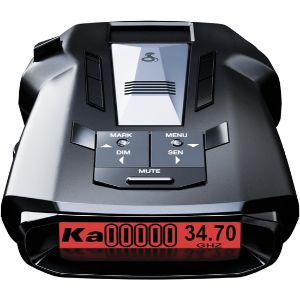
Its upgraded antenna platform and Digital Signal Processing (DSP) help process incoming signals quickly and deliver timely alerts. Like the Cobra490i, its LaserEye technology provides front and rear detection, helping identify radar and laser signals approaching from either direction.
One of its standout features is built-in GPS with AutoLearn Intelligence. The system learns familiar routes and can recognize recurring false alerts, helping reduce unnecessary interruptions over time.
You can also connect to the Drive Smarter community for shared alerts from other drivers. Apple CarPlay and Android Auto compatibility allow you to view routes and interact with alerts through your vehicle’s display.
The five-color OLED screen offers clear visibility and lets you customize its appearance to match your vehicle’s interior. However, the RAD 700i is a detection-only device, not a system that prevents speed enforcement.
Pros
- Premium antenna platform with fast DSP processing.
- Built-in GPS and AutoLearn false-alert filtering.
- Front and rear radar and laser detection.
- Customizable five-color OLED display.
Con
- Requires a power connection rather than operating as a fully cordless detector.
3. Radar Detector for Cars – Best for 360-Degree Full-Band Detection
This 360-degree radar detector for cars is designed for drivers who want broad signal detection and straightforward operation on both city streets and highways.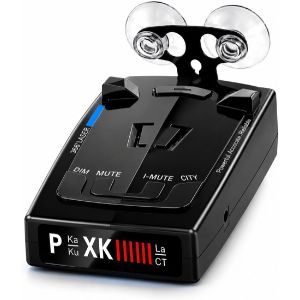
The radar detector supports multiple frequency bands, including X, K, Ka, and Ku, allowing it to receive signals across a range of commonly used radar frequencies.
Its 360-degree sensing capability is intended to monitor signals from multiple directions, helping you stay aware of nearby signal activity.
The detector uses Digital Signal Processing (DSP) to filter common interference from automatic door sensors and vehicle electronics, reducing unnecessary alerts.
Besides, with this detector, you can switch between City and Highway modes depending on your driving environment. City mode lowers sensitivity to help limit false warnings in busy areas, while Highway mode provides broader monitoring.
Clear voice alerts communicate detected signals and device status without requiring you to keep looking at the display.
Another convenient feature is its memory function, which restores your previous settings after restarting the vehicle. Its compact design also fits neatly into most vehicle interiors.
Pros
- Supports X, K, Ka, and Ku frequency bands.
- 360-degree signal sensing capability.
- DSP filtering helps reduce interference and false alerts.
- City and Highway modes with voice notifications.
Con
- Battery-powered or cordless operation is not confirmed.
Buy on Amazon
4. Uniden R3 Extreme Long-Range Laser/Radar Detector-Camera Detection
If you are looking for a cordless radar detector designed for strong detection sensitivity, useful GPS-based features, and fewer false alerts, then the Uniden R3 Extreme Long-Range Laser/Radar Detector is your ideal unit.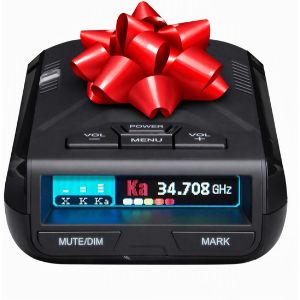
Its advanced detection technology is built to identify radar and laser signals over long distances, making it a suitable option for motorists who frequently drive on highways and unfamiliar routes. Its false-alert filtering also helps reduce unnecessary warnings from common sources of interference.
One of its most useful features is built-in GPS technology. The R3 can remember recurring false alerts, such as signals from automatic retail store doors, and automatically mute them when you travel through familiar locations again.
It also comes with a preloaded red-light and speed-camera database, with free database and firmware updates to keep the information current.
The multicolour OLED display presents detection information clearly, while programmable voice alerts communicate warnings without requiring you to take your eyes off the road. These features make the R3 convenient for drivers who prefer audible notifications and straightforward controls.
Pros
- Long-range detection with high sensitivity.
- GPS-based memory automatically mutes recurring false alerts.
- Preloaded red-light and speed-camera database.
- Clear multicolour OLED display and programmable voice alerts.
Con
- None to mention
5.Escort MAX 3 Laser Radar Detector – Best for GPS-Based False Alert Reduction
The Escort MAX 3 Laser Radar Detector is an ideal choice if you prioritise long-range detection, intelligent filtering, and reliable alerts. Its advanced detection platform is designed to identify radar and laser signals early, giving motorists more time to become aware of potential speed-monitoring activity.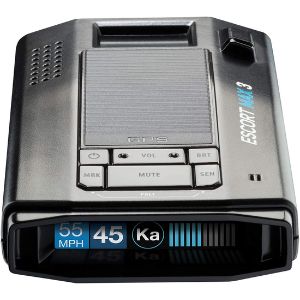
The unit includes advanced filtering software that processes thousands of radar signals to distinguish genuine threats from common sources of interference, helping reduce unnecessary alerts.
One of its standout features is AutoLearn Intelligence. Using built-in GPS, the detector learns familiar routes over repeated trips and can automatically reject recurring false alerts at specific locations.
Its variable Speed Sensitivity also adjusts detection sensitivity according to your driving speed, helping minimise distractions. Additionally, access to Escort’s Defender Database provides alerts for known red-light and speed-camera locations.
The MAX 3 is also compatible with the Escort M2 smart dash camera, allowing you to build a combined driver-awareness and recording system.
Pros
- Long-range radar and laser detection.
- GPS-based AutoLearn reduces recurring false alerts.
- Variable Speed Sensitivity minimises unnecessary warnings.
- Compatible with the Escort M2 smart dash camera.
Con
- Requires a power connection, limiting its suitability for drivers seeking a completely cordless detector.
Buy on Amazon
6. Uniden R4W Extreme Long-Range Laser/Radar Detector-Advanced Connectivity
The Uniden R4W Extreme Long-Range Laser/Radar Detector is designed for drivers who want extended detection range, intelligent false-alert filtering, and modern connectivity features.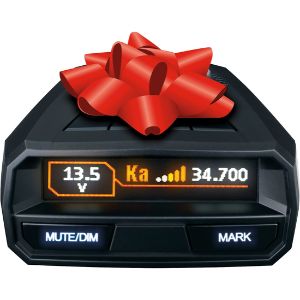
The unit uses a Blackfin Digital Signal Processor (DSP) to process incoming signals and deliver visual and voice alerts through its multicolour OLED display.
Uniden positions the R4W as an extreme long-range detector, making it an option worth considering for drivers who frequently travel on highways.
Its built-in GPS with Auto Mute Memory is particularly useful for reducing repeated false alerts. The detector remembers known interference sources, such as automatic retail store door sensors, along familiar routes and automatically mutes them on subsequent trips. Advanced K/Ka band filtering also helps reduce interference from blind-spot monitoring and collision-avoidance systems.
The R4W offers Wi-Fi, Bluetooth, GPS, R/TACH app support, and an included speed and red-light camera database. Customizable voice alerts provide useful information without requiring you to look at the display frequently.
Pros
- Extreme long-range detection with Blackfin DSP processing.
- GPS Auto Mute Memory reduces recurring false alerts.
- Advanced K/Ka band filtering.
- Wi-Fi, Bluetooth, R/TACH app support, and camera database.
Con
- Wireless connectivity does not eliminate the need for a power connection.
7. RadarShield Ghost Pro Radar and Laser Detector – Best for False Alert Filtering
This is yet another radar detector unit designed for drivers who want dependable signal detection, reduced interference, and easy-to-use controls.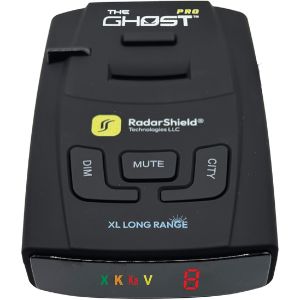
RadarShield Ghost Pro Radar and Laser Detector supports X, K, and Ka radar bands, along with laser detection, using digital signal processing (DSP) to identify incoming signals and provide early alerts. This gives you more time to become aware of potential speed-monitoring activity and adjust your driving accordingly.
Besides, this system includes IVT false-alert filtering, which helps screen out interference from blind-spot monitoring systems, collision-avoidance technology, and automatic door openers. It also offers instant-on alerts and ongoing software updates to help maintain its detection capabilities. For everyday convenience, the Ghost Pro includes one-touch Mute, Dim, and City controls. City mode helps you manage unnecessary alerts in areas with multiple signal sources, while Dim reduces display glare during night driving.
The package includes a windshield mount, 12V power adapter, and user manual for straightforward installation.
Pros
- Detects X, K, and Ka radar bands and laser signals.
- IVT filtering helps reduce false alerts.
- Convenient Mute, Dim, and City controls.
- Includes windshield mount and 12V power adapter.
Con
- False alerts may occur in areas with heavy interference
Buy on Amazon
8. Upgraded Radar Detector – Best for Long-Range 360-Degree Signal Detection
The Upgraded Radar Detector for Cars is designed for drivers who want broad signal monitoring and early alerts on highways and city roads. It can detect signals from distances of approximately 330 to 1,100 yards, giving motorists more time to become aware of potential speed-monitoring equipment.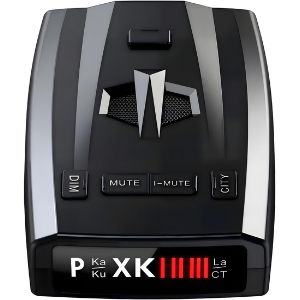
Its full-band detection system covers X, K, Ka, Ku, ST, and CT frequencies, while 360-degree monitoring is intended to identify signals from different directions.
Like other detectors, the Upgraded Radar Detector also uses a digital signal processing (DSP) chip to help reduce false alerts caused by automatic door openers and other vehicles’ blind-spot monitoring systems.
You can switch between City and Highway modes to adjust sensitivity depending on your driving environment. Audio alerts provide updates when signals are detected, while the built-in memory restores your preferred settings whenever you restart the vehicle.
Another notable feature is its electronic stealth technology, which is designed to make the detector less visible to certain radar-detector devices.
Pros
- Advertised detection range of up to 1,100 yards.
- Monitors multiple radar bands with 360-degree coverage.
- DSP filtering helps reduce interference and false alerts.
- City and Highway modes allow adjustable sensitivity.
Cons
- The advertised detection range may vary depending on road conditions, terrain, and the type of radar equipment used.
Buy on Amazon
9. Uniden DFR7 Laser/Radar Detector – Super Long Range
The Uniden DFR7 Laser/Radar Detector is designed for drivers who want long-range radar detection, GPS-based alerts, and fewer unnecessary interruptions.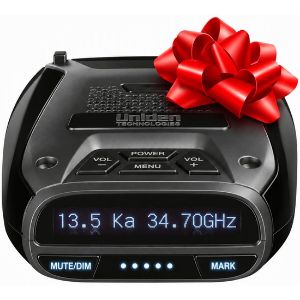
It offers wideband radar and laser detection with advanced sensitivity, helping you become aware of potential speed-monitoring signals on highways and city roads.
Its GPS technology is particularly useful for everyday driving because it can remember frequently encountered false alerts, such as signals from automatic doors at retail stores, and automatically mute them on familiar routes.
The DFR7 also comes with a preloaded database of red-light and speed camera locations. Uniden provides free database and firmware updates, helping keep the detector’s information current. For added convenience, programmable voice alerts communicate detected signals without requiring you to look at the display constantly.
The unit’s OLED screen shows useful information, including radar band frequency, numeric signal strength, maximum speed warning, and vehicle battery voltage.
Another advantage is its advanced K- and Ka-band filtering, which helps reduce false alerts from blind-spot monitoring and collision-avoidance systems in nearby vehicles.
Pros
- Long-range radar and laser detection.
- GPS remembers and mutes recurring false alerts.
- Preloaded red-light and speed camera database.
- Programmable voice alerts and informative OLED display.
Cons
- Requires a vehicle power connection
Buy on Amazon
10. Escort MAX 360c Radar Detector – Fast Performance
If you are looking for a radar detector that will provide you with broad radar awareness, fast signal processing, and convenient installation, then Escort MAX 360c Radar Detector is your go-to unit.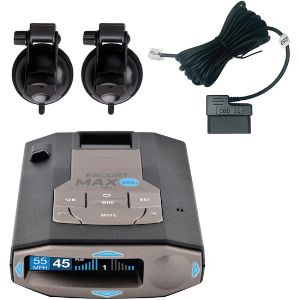
Its 360-degree detection system monitors signals from the front, rear, and sides of the vehicle. Directional arrows indicate where a detected threat is coming from, helping you identify potential radar activity without repeatedly taking your eyes off the road.
Its fast processing is designed to provide timely alerts, giving you more opportunity to remain aware of your surroundings and drive responsibly.
One of its key advantages is advanced false-alert filtering.
The detector helps reduce interference from collision avoidance systems (CAS), blind-spot monitoring (BSM), and other common radar sources. This can make everyday driving quieter, particularly in areas where multiple vehicles and electronic systems generate signals.
This bundle also includes an OBDII power cable and an extra magnetic mount. The OBDII cable provides power directly through your vehicle’s diagnostic port, creating a cleaner installation while freeing up the accessory power outlet. The additional mount makes it easier to move the detector between two vehicles.
Pros
- 360-degree detection with directional arrows.
- Fast signal processing for timely alerts.
- False-alert filtering helps reduce CAS and BSM interference.
- Includes an OBDII power cable and an extra magnetic mount.
Cons
- Requires a vehicle power connection, so it cannot operate as a fully cordless detector.
Buy on Amazon
Best Cordless Radar Detectors Buying Guide 2026
When shopping for the best cordless radar detectors, don’t focus on detection range alone. A good model should provide reliable signal detection, minimize unnecessary alerts, and remain convenient to use while driving.
You should also check whether the device is genuinely battery-powered or offers wireless connectivity through a smartphone app.
Here are what to consider before making your purchase.
Radar Detection Range and Sensitivity
Detection range is one of the first features to examine when choosing a radar detector. A model with good range can identify compatible radar signals from farther away, giving you more time to become aware of speed-monitoring equipment and maintain appropriate driving speeds. This can be particularly useful when traveling on highways, where vehicles generally move faster, and conditions can change quickly.
However, don’t assume that the detector advertising the longest range is automatically the best. Actual performance depends on factors such as terrain, road layout, weather, signal interference, and the type of radar equipment being used.
Detection sensitivity also matters because it determines how effectively the device identifies weaker signals.
Look for a detector with a well-designed antenna and reliable signal processing. Manufacturer-stated detection distances are useful for comparison, but independent testing provides a better indication of real-world performance.
A balance between useful range and accurate alerts is more important than an impressive distance figure alone.
Radar Bands and Laser Detection
Before buying a cordless radar detector, check which radar bands it can identify. Police radar equipment commonly operates on X, K, and Ka bands, although the bands used vary by location. Some detectors also support additional frequencies, such as Ku, depending on the product and market.
Laser detection is another feature worth considering. Unlike conventional radar, laser speed measurement uses focused light to measure a vehicle’s speed. A detector with laser sensors can alert you to compatible laser signals, but its effectiveness depends on the sensor design, detection angle, and surrounding conditions.
Choose a model that clearly lists the bands it supports rather than relying on broad descriptions such as full-band detection. You should also confirm that the device supports the frequencies used in the areas where you drive. Remember that radar and laser detection capabilities do not guarantee warning in every situation.
Battery Life and Power Options
Since the goal is to find a cordless radar detector, its power source deserves particular attention. A genuinely cordless model should have an internal rechargeable battery or another battery-powered system that allows it to operate without remaining connected to your vehicle’s power outlet.
Check the manufacturer’s stated battery runtime and how long the device takes to recharge. Longer battery life is especially useful for extended journeys because you won’t have to stop frequently to recharge the detector. Also consider whether the battery can be replaced if it eventually loses capacity.
Be careful when comparing products described as wireless. Some detectors offer Bluetooth, Wi-Fi, GPS, or smartphone connectivity but still require a USB cable, 12V adapter, or OBDII connection to operate. These features improve connectivity or installation convenience, but they do not make the detector cordless. Always confirm the power requirements before purchasing.
False Alert Filtering
Radar detectors can sometimes respond to signals that do not come from police speed-monitoring equipment. Automatic doors, blind-spot monitoring systems, collision-avoidance technology, and other vehicle electronics can produce interference that triggers unnecessary warnings.
A detector with effective false-alert filtering helps distinguish useful signals from common sources of interference. Digital signal processing (DSP), advanced K and Ka band filtering, and intelligent filtering systems can improve the experience by reducing repeated alerts.
GPS-based filtering is another useful feature. Some models can remember locations where false alerts frequently occur and automatically mute them when you drive past those places again. This is particularly convenient if you regularly travel along the same routes.
However, filtering should not be so aggressive that it suppresses genuine warnings. Look for adjustable sensitivity settings that allow you to balance alert accuracy with a quieter driving experience.
GPS Technology and Camera Database
GPS can make a radar detector more useful during everyday driving. Models equipped with GPS can use your location to provide alerts about known red-light cameras, speed cameras, and other mapped monitoring locations. Some also allow you to save locations where false alerts occur, reducing repeated warnings along familiar routes.
Before choosing a detector with GPS, check whether its camera database is preloaded and whether updates are available. Some manufacturers provide free database and firmware updates, while others may require a subscription or compatible smartphone application.
You should also consider how frequently the database is updated. Camera locations and road-monitoring arrangements can change so that outdated information may reduce the usefulness of these alerts.
GPS-based camera warnings are supplementary information, not a replacement for observing road signs and posted speed limits.
360-Degree Detection and Directional Alerts
A radar detector with 360-degree detection is designed to monitor signals coming from different directions around your vehicle. This can be useful because radar signals may originate from the front, rear, or sides, depending on the position of the monitoring equipment.
Some advanced models include directional arrows that indicate whether a detected signal is coming from ahead, behind, or either side. This gives you additional information about the signal’s apparent direction instead of simply producing a general warning.
When comparing detectors, check whether the manufacturer specifically confirms front, rear, and side detection. A product advertising 360-degree coverage should also explain how its sensors achieve that coverage.
Directional detection can improve situational awareness, but performance varies between models and should not be treated as guaranteed protection from every monitoring device.
Display, Voice Alerts, and Ease of Use
A radar detector should communicate warnings clearly without distracting you from driving. Examine the display before buying to determine whether it provides useful information, such as the detected radar band, signal strength, alert direction, and vehicle speed.
OLED displays are popular because they can provide clear information in a compact format. Some models also allow you to adjust brightness, change display colors, or dim the screen for nighttime driving.
Voice alerts are equally useful because they communicate warnings without requiring you to look at the device. Programmable voice announcements can make alerts easier to understand, particularly when several radar bands or signal types are detected.
Also consider the placement of buttons and controls. Functions such as mute, volume adjustment, and switching between City and Highway modes should be easy to access. A straightforward interface makes the detector more convenient to operate during daily journeys.
Mounting Options and Installation
Installation affects how convenient a radar detector is to use. Most conventional models attach to the windshield using a suction-cup mount, magnetic mount, or adhesive mounting system.
A secure mount keeps the detector in position and helps maintain the correct sensor orientation.
For a cordless model, consider whether the mounting system allows you to remove and reposition the device easily. This is particularly useful if you drive more than one vehicle or want to store the detector when leaving your car.
You should also check the manufacturer’s recommended mounting position. The detector should have a clear view of the road while remaining within local regulations governing windshield-mounted equipment. Avoid placing it where it obstructs your view or interferes with airbags and other safety systems.
If a product requires an OBDII cable, USB connection, or 12V adapter, remember that it is not fully cordless. A clean installation may reduce visible wiring, but it does not eliminate the need for a power connection.
Build Quality, Warranty, and Software Updates
A radar detector is an electronic device that may spend long periods exposed to heat, sunlight, and vibration inside a vehicle. Look for a well-built model with durable housing, reliable mounting hardware, and controls that can withstand regular use.
Warranty coverage is also worth checking. Find out how long the manufacturer supports the product and whether the warranty covers the battery, display, sensors, and other important components. This matters particularly for rechargeable models, since battery performance can decline over time.
Also, consider whether the manufacturer provides firmware updates. Software improvements can help maintain compatibility, refine signal processing, and update supported features.
A product with accessible updates and dependable customer support may offer better long-term value than a cheaper detector with limited support.
Benefits of Cordless Radar Detectors
Cordless radar detectors provide several practical advantages, particularly for drivers who prefer a clean vehicle interior and flexible device placement.
Unlike conventional models that depend on a permanent power connection, genuinely battery-powered detectors can operate without being plugged into the vehicle throughout the journey.
However, it’s important to distinguish between battery-powered detectors and wireless-connected models that still require a cable for power.
Reduced Cable Clutter
One of the biggest advantages of a cordless radar detector is the absence of a permanent power cable running across your dashboard or windshield.
Traditional detectors often connect to a 12V accessory outlet, USB port, or OBDII power cable. Depending on the vehicle’s interior layout, these wires can make the dashboard look untidy and interfere with other accessories.
A battery-powered radar detector eliminates much of this inconvenience. You can mount the device on the windshield or dashboard without routing a power cable through the vehicle. This creates a cleaner installation and leaves your accessory power outlet available for charging your phone or powering other equipment.
Flexible Mounting and Placement
Cordless radar detectors provide greater flexibility because they don’t need to remain close to a power outlet. This can make it easier to position the device where it has a clear view of the road while remaining within the manufacturer’s installation recommendations.
The flexibility is particularly useful when you drive different vehicles. Instead of installing a separate power cable in every car, you can remove the detector and move it to another vehicle, provided the mounting system supports easy repositioning.
Some models also include magnetic or quick-release mounts, making installation and removal straightforward. Just ensure the detector is securely mounted and does not obstruct your view of the road.
Convenient Use in Multiple Vehicles
If you regularly switch between personal, family, or work vehicles, a cordless radar detector can be more convenient than a permanently installed unit. You don’t have to purchase separate power cables or repeat the installation process every time you change vehicles.
A rechargeable detector can be removed from one vehicle and installed in another with minimal effort. This portability also makes it easier to store the device securely when leaving your car.
Before buying, check the battery runtime and mounting compatibility. A detector that requires frequent charging may become inconvenient if you regularly make long journeys or use several vehicles throughout the day.
Cleaner and More Professional Installation
A clutter-free dashboard can make your vehicle feel more organized. Traditional radar detectors may require visible cables connected to the cigarette-lighter socket or routed toward the OBDII port. Although professional installation can hide much of the wiring, the process may take additional time and expense.
A genuinely cordless detector avoids much of this installation work because it operates using its internal battery. You can mount it, switch it on, and use it without connecting a power cable every time you drive.
This is especially appealing to drivers who prefer a minimalist interior or don’t want to modify their vehicle’s existing wiring.
Greater Convenience During Installation and Removal
Installing a conventional radar detector can involve finding a suitable power source, routing the cable, and positioning the device. A battery-powered model simplifies this process because you don’t need to connect it to the vehicle’s electrical system.
This also makes removal easier. If you park in public areas and prefer not to leave electronic accessories visible, you can detach the detector and store it away. Quick-release mounting systems make this particularly convenient.
However, always follow the manufacturer’s instructions when removing or repositioning the device to avoid damaging its mount or sensors.
How Cordless Radar Detectors Work
A cordless radar detector works by receiving and processing radio-frequency signals transmitted by radar-based speed-measuring equipment. When a compatible signal is detected, the device alerts the driver through sound, voice announcements, or a visual display. Its cordless design relates primarily to how it receives power, not how it detects radar signals.
Understanding the technology helps you distinguish a genuinely battery-powered detector from a conventional model advertised as wireless because it connects to a smartphone.
Step 1: The Antenna Receives Radar Signals
The detection process begins with the antenna, which is designed to receive radio-frequency signals from compatible radar equipment. Police radar guns transmit electromagnetic waves toward moving vehicles and use the reflected signals to determine their speed.
When these signals reach the detector’s antenna, the device captures them for processing. Most consumer radar detectors are designed to recognize commonly used frequency bands, including X, K, and Ka.
Some models also support additional bands, depending on their design.
The antenna’s sensitivity and quality influence how effectively the detector receives weaker signals.
However, actual detection range varies with the type of radar equipment, surrounding terrain, road conditions, and other sources of interference.
Step 2: The Processor Identifies and Filters Signals
After receiving a signal, the detector’s electronic processing system examines its frequency and characteristics to determine whether it resembles a supported radar signal.
Modern models often use digital signal processing (DSP) to analyze incoming signals and distinguish potential threats from common sources of interference.
This filtering is important because many everyday devices can produce signals that overlap with frequencies monitored by radar detectors. Examples include automatic door openers and blind-spot monitoring systems in nearby vehicles.
More advanced detectors may use GPS-based filtering and adjustable sensitivity settings to reduce repeated false alerts. The aim is to provide useful warnings without constantly distracting the driver with signals that are unlikely to come from speed-monitoring equipment.
Step 3. The Detector Activates an Alert
When the processor identifies a signal that meets its detection criteria, the device communicates the information to the driver. Depending on the model, it may produce a beep, display the detected radar band, show signal strength, or provide a spoken warning.
Some premium models also use directional arrows to indicate whether the signal appears to originate from the front, rear, or side of the vehicle. This can help drivers understand where a detected signal is coming from.
The warning system is designed to improve awareness, not guarantee that you will receive advance notice of every speed-monitoring device. For example, some radar equipment uses brief transmissions or operates in ways that limit the warning available to other vehicles.
Step 4. GPS Adds Location-Based Information
Radar detection and GPS serve different purposes. The antenna receives radar signals, while the GPS receiver determines the vehicle’s location using satellite signals.
A detector with GPS can compare your position with stored information about known speed cameras and red-light cameras. It may also remember locations where recurring false alerts occur and automatically mute them when you pass those points again.
Some models allow you to save locations manually or receive database updates from the manufacturer. This can make everyday driving more convenient, especially along familiar routes.
However, GPS camera alerts depend on the accuracy and freshness of the database. They should supplement, not replace, attention to road signs and posted speed limits.
Step 5. The Battery Powers the Detection System
This is what makes a genuinely cordless radar detector different from a conventional wired model. Instead of drawing electricity continuously from a vehicle’s 12V outlet, USB port, or OBDII connection, a cordless model uses an internal rechargeable battery to power its antenna, processor, display, and alert system.
When the battery runs low, you recharge it according to the manufacturer’s instructions. Battery capacity, screen brightness, alert activity, GPS use, and wireless connectivity can all affect how long the detector operates between charges.
Some detectors described as wireless still require a permanent power cable. Bluetooth, Wi-Fi, and smartphone compatibility do not mean that a device has an internal battery. Always check the power specifications before purchasing.
Step 6. Laser Detection Uses a Different Technology
Some radar detectors also include laser detection, but this function works differently from conventional radar detection. Laser speed guns use focused pulses of infrared light rather than radio waves to measure a vehicle’s speed.
A detector with laser sensors uses optical components to identify compatible light pulses and alert the driver. Its effectiveness depends on factors such as sensor placement, viewing angle, distance, and surrounding conditions.
Laser warnings should not be treated as guaranteed advance notice. Because laser beams are narrow and directed at specific vehicles, a detector may only alert you after the vehicle has already been targeted.
Cordless vs. Wired Radar Detectors: What’s the Difference?
The main difference between cordless and wired radar detectors is how they receive power. Both types are designed to identify compatible radar signals and alert drivers, but their installation, portability, and power requirements differ.
A cordless radar detector uses an internal rechargeable battery, allowing it to operate without remaining connected to the vehicle’s electrical system.
A wired model, on the other hand, draws power from a 12V accessory outlet, USB connection, or OBDII port. Understanding these differences can help you choose a detector that suits your driving habits.
1. Power Source and Battery Life
Cordless radar detectors rely on rechargeable batteries to operate. This eliminates the need for a permanent power cable and makes them convenient for drivers who prefer a simple installation.
However, battery life is an important consideration. You may need to recharge the device regularly, especially when using features such as GPS, Bluetooth, Wi-Fi, and bright displays.
Wired radar detectors receive continuous power from the vehicle while connected. You don’t have to worry about charging an internal battery before every journey, making them suitable for drivers who spend long hours on the road. Their main limitation is the need for a power connection.
2. Installation and Portability
Cordless models are generally easier to install because they don’t require power cables to be routed around the dashboard or windshield. You can mount the detector, switch it on, and begin using it once it has sufficient battery charge.
Many are also easier to transfer between vehicles.
Wired models may require more installation work, particularly when using a hardwired or OBDII connection.
A standard 12V adapter is usually straightforward to install, but visible cables can make the interior look untidy. Some bundles include extra mounts or alternative power cables to simplify moving the detector between vehicles.
3. Convenience During Long Journeys
For short trips and everyday driving, a cordless detector can be convenient because you don’t have to connect a cable whenever you enter the vehicle. However, its usefulness on long journeys depends on battery capacity and runtime.
Wired detectors are often more convenient for extended driving because they receive continuous power from the vehicle.
You can leave the device operating throughout the journey without worrying about its internal battery running low, provided the power connection remains active.
4. Features and Detection Performance
Cordless and wired detectors can offer similar detection technologies. Both may support X, K, and Ka radar bands, laser detection, GPS camera alerts, false-alert filtering, voice warnings, and directional detection.
The power source alone does not determine detection performance. Antenna quality, signal processing, sensor design, and software all influence how effectively a detector identifies compatible signals.
Some of the advanced models reviewed in this guide, including the Escort MAX 360c and Uniden DFR7, offer useful detection and filtering features but require vehicle power. Their wireless connectivity or convenient mounting options should not be confused with battery-powered operation.
5. Maintenance and Overall Cost
Cordless detectors require battery maintenance. Over time, rechargeable batteries can lose capacity, reducing how long the device operates between charges. Depending on the design, replacing the battery may be difficult or impossible.
Wired detectors avoid this particular concern because they draw power directly from the vehicle.
However, their cables, adapters, and connectors may eventually wear out or require replacement.
When comparing prices, consider the full cost of ownership. A cordless model may save you from buying additional power accessories, while a wired detector may offer more consistent operation without regular recharging.
Which One Should You Choose?
Choose a cordless radar detector if you value portability, a tidy dashboard, and the convenience of operating without a permanent power connection. Just make sure its battery runtime is sufficient for your typical journeys.
A wired radar detector is a better option if you frequently drive long distances, prefer continuous power, or want access to advanced features without worrying about battery life.
Ultimately, neither type is automatically better in detection performance. Focus on reliable signal detection, effective false-alert filtering, suitable features, and compatibility with the radar frequencies used where you drive.
Frequently Asked Questions (FAQs)
1. Do cordless radar detectors need batteries?
Yes. A genuinely cordless radar detector needs an internal rechargeable battery or another onboard power source to operate without a permanent vehicle connection. The battery powers the antenna, processor, display, and alert system.
However, some products advertised as wireless still require a 12V adapter, USB cable, or OBDII connection. Always check the manufacturer’s power specifications before purchasing.
2. How long does a battery-powered radar detector last?
Battery life varies depending on battery capacity, display brightness, GPS activity, wireless connectivity, and how frequently the detector receives signals. Some models may operate for several hours, while others may last longer between charges.
Check the manufacturer’s stated runtime and consider how it compares with the length of your usual journeys. Also find out whether the battery is replaceable.
3. Are cordless radar detectors as effective as wired models?
Cordless radar detectors can offer detection capabilities comparable to wired models when they use similar antennas, sensors, and signal-processing technology. The power source alone does not determine detection range or accuracy.
However, battery limitations may affect convenience during extended journeys.
Compare independent performance tests, supported radar bands, false-alert filtering, and battery runtime before choosing between the two types.
4. Can a radar detector detect both radar and laser guns?
Some radar detectors support both radar and laser detection. Radar detection uses an antenna to identify radio-frequency signals, commonly across X, K, and Ka bands.
Laser detection uses optical sensors to identify infrared light pulses from compatible laser speed-measuring devices.
However, laser detection does not guarantee warning because laser beams are narrow and usually directed at individual vehicles.
5. What is the difference between wireless and cordless radar detectors?
A wireless radar detector typically refers to a model with connectivity features such as Bluetooth, Wi-Fi, or smartphone integration. These features allow it to communicate with mobile applications or share alerts, but the device may still require a power cable.
A cordless radar detector, by contrast, operates using an internal battery without needing a permanent connection to the vehicle’s electrical system.
6. Are radar detectors legal to use?
Radar detector laws vary depending on the country and jurisdiction. Some places permit their use in private vehicles, while others restrict or prohibit them. Certain jurisdictions also regulate devices that interfere with speed-measuring equipment.
Before installing or using a radar detector, check the applicable traffic laws and regulations in your location. Always observe posted speed limits regardless of whether you use a detector.
7. Do radar detectors warn you about speed cameras?
Some radar detectors include GPS databases containing the known locations of fixed speed cameras and red-light cameras.
When GPS is enabled, the device can compare your location with stored information and provide an alert as you approach a listed location.
The usefulness of this feature depends on database accuracy and update frequency. It may not identify newly installed or unlisted cameras, so continue observing road signs and speed limits.
Conclusion
The best cordless radar detectors combine convenient power options, reliable signal detection, effective false-alert filtering, and easy-to-understand warnings. Before buying, pay particular attention to battery life, supported radar bands, laser detection, GPS features, and mounting flexibility.
Remember that wireless connectivity does not necessarily mean a detector is battery-powered. Some of the models reviewed above offer excellent detection features but still require a vehicle power connection.
Choose a device that meets your practical needs, check its power requirements carefully, and always use it in accordance with local traffic laws.