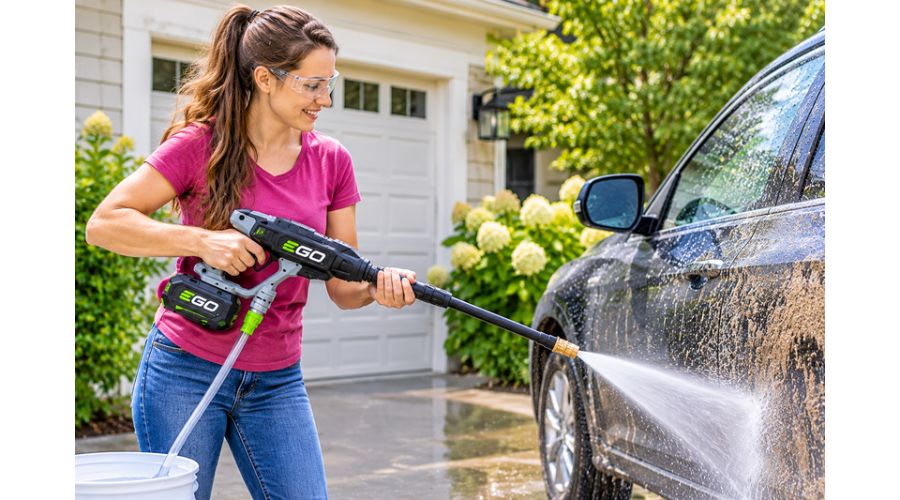
 A cordless pressure washer makes it easier to clean vehicles, outdoor furniture, patios, garden equipment, and other surfaces without being restricted by an electrical power cord.
Unlike traditional electric pressure washers, these portable machines use rechargeable batteries to power their motors and pumps. Some models also feature a suction hose that allows you to draw water from a bucket, tank, or another suitable water source.
However, knowing how to use a cordless pressure washer correctly is important if you want to achieve good cleaning results without damaging the machine or the surface you are cleaning.
You need to install the battery properly, connect the water supply, select the correct nozzle, and adjust the spray distance according to the cleaning task.
Whether you have just purchased a portable cordless pressure washer or want to get more out of your existing machine, this guide explains everything you need to know. Read on!
Also Read:
How Does a Cordless Pressure Washer Work?
Before learning how to use a cordless pressure washer, it helps to understand how the equipment operates. A cordless pressure washer uses a rechargeable battery to power an electric motor, which drives a pump that moves water through a hose and spray nozzle.
The battery supplies electrical energy to the motor. When you press the trigger, the motor operates the pump, which draws water from the connected supply and sends it through the spray system.
The nozzle controls the shape and direction of the water stream. Depending on the model, you may be able to select a narrow jet, a wide fan spray, a shower pattern, or another setting.
Battery-Powered Motor
The battery is the main power source of a cordless pressure washer. Most models use rechargeable lithium-ion batteries, although the voltage and capacity vary between brands.
When you install a charged battery, it supplies power to the motor. The motor then drives the pump, allowing the machine to draw water and deliver it through the spray gun.
Some models use proprietary battery platforms, while others are designed to work with batteries from existing power tool systems. Always confirm compatibility before installing a battery.
Water Intake System
Cordless pressure washers generally use one of two water supply arrangements. Some connect directly to a garden hose, while others use a suction hose with a filter that draws water from a suitable container.
The suction hose is particularly useful when you are washing a vehicle away from an outdoor tap or cleaning garden equipment in an area without a convenient water connection.
The filter helps prevent debris from entering the pump. It should remain properly installed and submerged when the machine is drawing water from a container.
Pump and Spray Nozzle
The pump increases the pressure of the water before it travels through the hose and spray gun. When you press the trigger, the pressurized water passes through the nozzle and reaches the cleaning surface.
The nozzle determines the spray pattern.
A narrow spray concentrates the water into a smaller area, while a wider spray covers a larger section.
Some cordless pressure washers have adjustable pressure settings that allow you to select different operating modes. These features help you adapt the machine to different cleaning tasks.
What You Need Before Using a Cordless Pressure Washer
Preparing your equipment before switching it on helps prevent interruptions and reduces the risk of damaging the machine.
Although the exact accessories vary between models, most cordless pressure washers require a battery, charger, water hose, filter, spray gun or lance, and at least one nozzle.
Here is what you should have ready before starting.
A Fully Charged Compatible Battery
Check that your battery is fully charged or has enough power for the cleaning task. A low battery may reduce the available operating time and interrupt your work.
Use only the battery specified or approved by the manufacturer. Do not assume that batteries from different brands or voltage platforms are interchangeable.
If you are using a model that is compatible with an existing power tool battery system, confirm the exact compatibility requirements before installation.
A Suitable Water Source
You need a reliable supply of clean water before operating the pressure washer.
Depending on the model, you can connect the machine to a garden tap or use its suction hose to draw water from a bucket, tank, or other approved container.
Make sure the container has enough water to complete your task. If the water level becomes too low, the filter may draw in air instead of water, interrupting the flow.
The Correct Hose and Filter
Inspect the water hose for cracks, kinks, blockages, or loose connections. A damaged or poorly connected hose can prevent the machine from drawing water properly.
If you are using a suction hose, check that the filter is attached securely and free from debris.
Use the hose and connectors supplied or approved for your particular pressure washer. Different models may have different connection sizes and operating requirements.
The Appropriate Spray Nozzle
Choose the nozzle according to the surface you intend to clean.
A wide-angle spray is generally a better starting point for vehicles, windows, and delicate surfaces.
A narrower spray can be useful for stubborn dirt on more durable materials, but it should be used cautiously.
If your cordless pressure washer comes with a multi-pattern nozzle, check the available spray settings before beginning.
Suitable Cleaning Detergent
You may also need a cleaning solution if you are washing a vehicle, patio, or another surface with stubborn dirt.
Use a detergent specifically approved for your pressure washer and the material you intend to clean.
Avoid household chemicals, solvents, bleach, or industrial cleaners unless the manufacturer explicitly permits them.
Some pressure washers include a foam bottle or detergent attachment, while others require a separate accessory.
How to Set Up a Cordless Pressure Washer
Correct setup is essential for getting your cordless pressure washer to work properly. Before installing the battery or switching on the machine, assemble the necessary accessories and inspect the connections.
The exact arrangement varies by brand, so always refer to the instruction manual for your model.
Step 1: Charge the Battery
Start by charging the battery using the manufacturer’s recommended charger.
Remove the battery from the pressure washer if it is already installed. Connect it to the correct charger and allow it to charge according to the manufacturer’s instructions.
Most battery chargers have indicator lights that show whether the battery is charging or fully charged.
Do not charge a wet or damaged battery. Keep the battery and charger away from water, excessive heat, and other conditions that could damage them.
If your cordless pressure washer uses a removable battery, you may want to keep a spare charged battery available for longer cleaning sessions.
Step 2: Assemble the Spray Gun and Lance
Next, attach the spray gun, wand, or lance to the main body of the pressure washer, depending on the design.
Some models use a quick-connect fitting, while others require you to insert and twist the accessory until it locks into position.
Make sure the connection is secure before proceeding. A loose attachment may detach during operation.
If your machine has several accessories, identify the one you need for the cleaning task. Avoid forcing an attachment into a connection that does not fit correctly.
Step 3: Connect the Water Hose
Locate the water inlet on the pressure washer. Attach the supplied water hose or suction hose to the connector.
If the model uses a quick-connect fitting, push the connector into place until it locks. Gently pull the hose to confirm that it is secure.
For a suction-hose setup, attach the filter to the end that will sit inside the water container.
Check that the hose is not sharply bent, twisted, or blocked. A restricted hose can interfere with water intake.
Step 4: Position the Water Source
If you are using a bucket or tank, place it on a stable surface near the pressure washer.
Lower the filter end of the suction hose into the water. Make sure the filter is submerged and remains below the water level during operation.
Do not allow the filter to rest against the bottom of a container where it may collect sediment. If the water source contains dirt, leaves, or other debris, choose a cleaner supply instead.
If your machine connects to a garden tap, follow the manufacturer’s instructions for the required inlet pressure and hose arrangement.
Step 5: Install the Battery
Once the accessories and water supply are connected, install the charged battery.
Align the battery with the appropriate mounting rails or connection points. Slide it into position until it locks securely.
Some cordless pressure washers have a battery compartment cover that must be closed before operation. Check that the cover is properly secured.
Do not install or remove the battery while the machine is switched on. Keep the battery compartment dry and follow the manufacturer’s safety instructions.
Step 6: Check the Entire Setup
Before starting the machine, inspect the connections one more time.
Confirm that the nozzle is secure, the hose is properly attached, the filter is submerged, and the battery is locked in position.
Check the work area for loose objects, electrical equipment, children, and pets. Make sure you have enough space to move safely while operating the pressure washer.
How to Connect a Cordless Pressure Washer to a Water Source
One of the main advantages of a cordless pressure washer is that many models can draw water from a container instead of relying on a permanent garden hose connection.
This makes them useful for cleaning vehicles, bicycles, and outdoor equipment in places where a tap is not readily available.
However, the water connection must be set up correctly to prevent air from entering the pump or debris from blocking the filter.
1. Connecting to a Garden Hose
If your cordless pressure washer supports a direct garden hose connection, locate the water inlet and attach the appropriate connector.
Connect the garden hose to the machine and then turn on the water supply according to the manufacturer’s instructions.
Inspect the connection for leaks before switching on the pressure washer.
Some models have specific inlet-pressure limits. Do not exceed the maximum permitted water supply pressure, as doing so may damage the machine or its fittings.
2. Drawing Water From a Bucket
If you are using a bucket, connect the suction hose to the water inlet and attach its filter to the opposite end.
Fill the bucket with clean water and place the filter inside. Make sure the filter remains submerged while the pressure washer is operating.
When you first start the machine, it may take several seconds for water to travel through the suction hose. Some models require you to hold the trigger until a steady flow is established.
The priming time varies between products, so follow the instructions for your particular model.
3. Drawing Water From a Tank or Container
A larger water tank can be useful when you need to clean several items or work away from a garden tap.
Place the tank on a stable surface and position the pressure washer according to the manufacturer’s recommended suction arrangement.
Check the maximum permitted suction height. If the water source is too far below the pump, the machine may struggle to draw water.
Use the supplied filter and hose, and avoid placing the filter in muddy or contaminated water.
4. Can You Use Water From a River or Pool?
Some cordless pressure washers are designed to draw water from alternative sources, but this does not mean every model can safely use water from a river, pond or swimming pool.
Water containing sand, mud, leaves, algae or other contaminants may block the filter or damage the pump.
Check the manufacturer’s instructions before using any alternative water source. Unless the manual specifically permits it, use clean fresh water from a suitable tap or container.
Never use a pressure washer to pump fuel, solvents, corrosive chemicals, or other hazardous liquids.
How to Prime a Cordless Pressure Washer Before Use
Priming is the process of allowing water to fill the intake hose and pump so that the machine can operate properly.
This step is particularly important when drawing water from a bucket or tank. If air remains in the suction hose, the pressure washer may fail to draw water or produce an inconsistent stream.
Check the Water Filter
Make sure the filter is securely attached to the suction hose.
Inspect it for dirt, leaves, or other debris that could restrict water intake. Clean it if necessary before placing it in the water source.
Submerge the Filter
Place the filter completely below the water surface, ensuring that it remains submerged during operation.
Avoid positioning it against the bottom of a dirty container. If the filter becomes blocked, water flow may be interrupted.
Allow Water to Enter the Hose
Follow the priming procedure in your pressure washer’s manual.
Some machines require you to switch on the water supply and operate the trigger with a particular nozzle removed. Others allow the pump to draw water automatically when the trigger is pressed.
Keep the nozzle pointed toward a safe area while priming.
Wait for a Steady Water Flow
Allow the machine to draw water until the stream becomes consistent.
If the pressure washer does not produce water after the recommended priming period, switch it off and inspect the filter, hose, and connections.
Do not allow the pump to run dry while trying to force water through the system. Operating without an adequate water supply can damage the pump.
How to Choose the Right Nozzle on a Cordless Pressure Washer
The nozzle determines how water leaves the pressure washer and reaches the cleaning surface.
Using the correct nozzle helps you remove dirt effectively while reducing the risk of damage.
Many portable cordless pressure washers include a multi-pattern nozzle with several spray settings. Other models use separate interchangeable nozzles.
1. Zero-Degree Nozzle
A zero-degree nozzle produces a highly concentrated stream of water.
It is designed for very localized cleaning on suitable durable surfaces. However, the concentrated stream can cause damage if directed at delicate materials.
Avoid using it on vehicle paint, windows, soft wood, plastic furniture, or other surfaces that may be damaged by concentrated pressure.
If your cordless pressure washer includes this setting, use it only for applications specifically permitted by the manufacturer.
2. Fifteen-Degree Nozzle
A 15-degree nozzle produces a relatively narrow fan of water.
It can provide more concentrated cleaning power than wider spray patterns and may be useful for stubborn dirt on suitable hard surfaces.
However, it should not be treated as a universal cleaning setting. Test it on an inconspicuous area and maintain a safe distance.
3. Twenty-Five-Degree Nozzle
A 25-degree nozzle offers a balance between cleaning force and coverage.
It can be useful for cleaning some outdoor surfaces, garden equipment, and durable materials.
When using it on unfamiliar surfaces, start farther away and gradually adjust the distance if necessary.
4. Forty-Degree Nozzle
A 40-degree nozzle produces a wide spray that covers a larger area.
It is generally a useful starting point for rinsing vehicles, outdoor furniture, and other surfaces that require a gentler spray.
The wider pattern spreads the water over a larger area, reducing the concentration of force compared with a narrow nozzle.
5. Shower or Gentle Spray Nozzle
Some cordless pressure washers include a shower or watering pattern.
This setting produces a gentler flow that may be useful for light rinsing, watering certain plants, or cleaning surfaces that should not be exposed to a concentrated jet.
Check the product manual to understand the intended use of this setting.
6. Foam Nozzle
A foam nozzle or detergent attachment allows you to apply a suitable cleaning solution to the surface.
It is commonly used when washing vehicles, outdoor furniture, and other surfaces that benefit from detergent.
The foam attachment does not necessarily produce the same cleaning pressure as a standard spray nozzle. Its main purpose is to distribute the cleaning solution evenly.
How to Use a Cordless Pressure Washer ( Step by Step)
Once the machine is assembled, the battery is installed, and the water supply is ready, you can begin cleaning.
The following steps provide a general procedure for operating a cordless pressure washer safely and effectively.
Step 1: Wear Appropriate Protective Equipment
Before switching on the pressure washer, put on suitable protective equipment.
Safety glasses help protect your eyes from dirt, loose debris, and water spray. Wear closed footwear with a good grip to reduce the risk of slipping on wet surfaces.
Depending on the cleaning task, gloves and suitable clothing may also be useful.
Keep children and pets away from the operating area.
Step 2: Select the Correct Nozzle
Choose a nozzle that matches the surface you intend to clean.
For vehicles and delicate materials, begin with a wide spray pattern. For tougher dirt on durable surfaces, you may be able to use a narrower pattern if permitted by the manufacturer.
Make sure the nozzle is securely attached before installing or activating the machine.
Step 3: Switch on the Water Supply
If your pressure washer uses a garden hose, open the water supply as instructed.
If you are using a bucket or tank, confirm that the filter is submerged and that the suction hose is free from kinks.
Allow the water to reach the pump and establish a steady flow before beginning the cleaning task.
Step 4: Unlock the Safety Mechanism
Many cordless pressure washers include a trigger lock or safety button to prevent accidental activation.
Release the safety lock according to the manufacturer’s instructions.
Keep the nozzle pointed away from people, animals, and fragile objects.
Step 5: Start the Pressure Washer
Hold the pressure washer firmly with both hands where the design requires it.
Press the trigger or power control to start the machine. Be prepared for the reaction force created by the water stream.
Allow the pressure washer to establish a steady flow before directing it toward the surface.
Step 6: Test the Spray on a Small Area
Before cleaning the entire surface, test the water stream on a small, inconspicuous area.
Begin at a suitable distance and observe how the surface responds.
If the spray appears too strong, select a wider nozzle, reduce the pressure setting if available, or move farther away.
Step 7: Clean Using Controlled Movements
Move the spray steadily across the surface instead of holding it in one place.
Use overlapping passes to cover the area evenly. Avoid directing the water at joints, electrical connections, damaged seals, or other vulnerable components.
For larger surfaces, divide the work into manageable sections.
Step 8: Release the Trigger When Finished
Once you have completed the cleaning task, release the trigger and switch off the machine according to the manual.
If you need to move to another area, make sure the nozzle is pointed in a safe direction, and the trigger is secured before carrying the machine.
Do not leave the pressure washer running unattended.
The video below demonstrates how to set up and use a cordless pressure washer
How to Use a Cordless Pressure Washer to Wash a Car
Washing a car is one of the most common reasons people buy a portable cordless pressure washer.
Its battery-powered design makes it convenient to clean a vehicle in a driveway, parking area, or another location without needing an electrical extension cord.
However, you must use the correct spray setting and avoid directing excessive pressure at the vehicle’s paintwork.
1. Prepare the Vehicle
Park the car in a suitable shaded area and allow hot surfaces to cool.
Close all windows and doors. Check that the fuel filler door, sunroof, and other openings are properly closed.
Remove loose objects from the surrounding area and prepare your car shampoo, wash mitt, and microfiber towels.
2. Rinse Loose Dirt
Attach a wide-angle nozzle and select a gentle pressure setting.
Start at the roof and work downward, rinsing away loose dust, mud, and road grime.
Maintain a safe distance from the vehicle. Avoid spraying directly into damaged paint, electrical components, air intakes, or sensitive seals.
3. Apply Car Shampoo
If your cordless pressure washer has a foam bottle, fill it with a suitable vehicle shampoo according to the product instructions.
Attach the foam accessory and apply the solution evenly across the vehicle.
Allow the shampoo to work for the recommended period. Do not let it dry on the paint.
4. Wash the Vehicle
Use a clean microfiber wash mitt and suitable car shampoo to remove dirt that remains attached to the paint.
Work from the upper sections toward the lower parts of the vehicle. Rinse the mitt regularly to reduce the risk of dragging grit across the paint.
5. Rinse and Dry
Replace the foam attachment with the appropriate rinse nozzle.
Rinse away the cleaning solution using a wide spray pattern. Finally, dry the vehicle using clean microfiber towels to reduce water spots.
Remember that a cordless pressure washer is primarily useful for rinsing and applying cleaning solutions. It does not replace careful hand washing when removing stubborn grime.
How to Use a Cordless Pressure Washer to Clean a Patio
Patios can collect mud, dust, algae, leaves, and other outdoor dirt. A cordless pressure washer can help remove loose deposits from suitable paving materials.
However, the correct pressure depends on the material and its condition.
1. Remove Loose Debris
Start by sweeping away leaves, loose soil, and other debris.
This prevents the pressure washer from spreading dirt across the patio and makes the cleaning process easier.
Move outdoor furniture and other objects away from the area you intend to clean.
2. Select an Appropriate Nozzle
Choose a spray pattern suitable for the paving material.
A 25-degree or 40-degree nozzle may be appropriate for some durable surfaces, but you should begin with a wider pattern and test a small section.
Avoid concentrated spray settings on soft stone, damaged grout, or fragile paving.
3. Clean in Sections
Divide the patio into smaller sections.
Move the spray evenly across each section, maintaining a consistent distance from the surface. Avoid holding the nozzle over one spot for too long.
If the dirt is particularly stubborn, use a suitable patio cleaning solution where permitted by the manufacturer.
4. Rinse the Area
After loosening the dirt, rinse the patio to remove remaining debris and cleaning solution.
Allow the surface to dry before returning furniture and other objects.
If your cordless pressure washer has limited water flow, be patient when cleaning larger areas. A full-size pressure washer may be more suitable for extensive or heavily soiled patios.
How to Use a Cordless Pressure Washer to Clean Garden Equipment
Garden tools, lawn equipment, wheelbarrows and outdoor accessories can become covered in mud, grass and dust.
A cordless pressure washer makes it easier to rinse these items without carrying them to a fixed washing area.
Remove Loose Dirt
Start by brushing or scraping away large deposits of mud and grass.
This reduces the amount of debris that enters the water filter or gets pushed into moving parts.
Protect Sensitive Components
Before spraying, identify electrical connections, battery compartments, air intakes, bearings, and other components that should not be exposed to direct water pressure.
Remove batteries from compatible cordless tools before cleaning them, and follow the manufacturer’s cleaning instructions.
Use a Gentle Spray
Choose a wide-angle nozzle and begin at a safe distance.
Rinse the exterior surfaces using controlled movements. Avoid directing water into motor housings, electrical connectors, or sealed components unless the manufacturer confirms that they can withstand the spray.
Dry the Equipment
After cleaning, allow the equipment to dry thoroughly.
Wipe metal components where necessary and inspect them for signs of corrosion or damage.
Never reinstall a battery into equipment that is still wet.
How to Use a Cordless Pressure Washer With Detergent
Some cordless pressure washers include a foam bottle, detergent container, or dedicated cleaning attachment.
Using detergent can make it easier to loosen dirt and improve the results when washing vehicles, patios, and outdoor furniture.
However, you should use only cleaning solutions approved for your equipment and the surface being cleaned.
Choose the Correct Detergent
Select a cleaning solution designed for the material you intend to wash.
For vehicles, use car shampoo. For patios, choose a suitable outdoor surface cleaner. For outdoor furniture, select a product that is safe for its material.
Do not use solvents, flammable liquids, strong acids, strong alkaline chemicals, or household cleaners unless the pressure washer manufacturer specifically permits them.
Prepare the Foam Bottle
Remove the detergent container or foam attachment according to the manufacturer’s instructions.
Add the cleaning solution and water in the recommended ratio.
Avoid using a highly concentrated or unusually thick solution because it may block the detergent nozzle.
Attach the Foam Nozzle
Secure the detergent attachment to the pressure washer.
Check that it is locked into position and that the bottle is properly fitted.
Apply the Cleaning Solution
Point the nozzle toward the surface and apply the detergent evenly.
Allow it to work for the period stated on the cleaning product label. Avoid allowing the solution to dry on the surface.
Rinse the Detergent System
After applying detergent, follow the manufacturer’s instructions for flushing the system.
Some models require you to remove the detergent attachment and run clean water through the machine to remove remaining cleaning solution.
This helps prevent residue from clogging the nozzle or detergent passages.
Common Mistakes to Avoid When Using a Cordless Pressure Washer
Although cordless pressure washers are relatively straightforward to operate, mistakes during setup or cleaning can affect their performance and lifespan.
Here are some common problems to avoid.
Running the Machine Without Water
One of the biggest mistakes is switching on a cordless pressure washer before establishing a reliable water supply.
The pump needs water to operate correctly. Running it dry can cause overheating or internal damage.
Always connect the water source and follow the priming procedure before operating the machine.
Using the Wrong Nozzle
A concentrated nozzle can damage delicate surfaces, while an overly wide spray may be ineffective against stubborn dirt.
Choose the spray pattern according to the material and cleaning task.
When uncertain, begin with a wide spray and test an inconspicuous area.
Holding the Nozzle Too Close
Using a pressure washer too close to the cleaning surface can concentrate the force of the water and cause damage.
Start at a safe distance and gradually move closer only if necessary and permitted by the manufacturer’s instructions.
There is no single safe distance for every machine and surface.
Ignoring the Water Filter
A dirty or blocked filter can reduce water intake and cause inconsistent operation.
Inspect the filter before each use, especially when drawing water from a container.
Clean it when necessary and replace damaged filters with approved parts.
Using the Wrong Cleaning Chemicals
Some household cleaning products can damage the pump, hose, detergent attachment, or surface being cleaned.
Use only compatible detergents and follow the recommended dilution instructions.
Never mix cleaning chemicals unless their manufacturers explicitly state that doing so is safe.
Using an Incompatible Battery
A battery that does not match the manufacturer’s requirements may fail to operate the machine correctly or create a safety risk.
Always confirm voltage, platform, and compatibility before installation.
Use the charger specified for the battery and avoid using damaged battery packs.
Forgetting to Secure the Connections
Loose hose and nozzle connections can cause leaks or allow accessories to detach during operation.
Inspect every connection before starting the pressure washer.
If you notice water leaking from a fitting, switch off the machine and correct the problem before continuing.
How to Maintain a Cordless Pressure Washer After Use
Proper maintenance helps keep your cordless pressure washer in good working condition.
After cleaning, take a few minutes to remove water, rinse accessories, and inspect the equipment for damage.
Switch Off the Pressure Washer
Release the trigger and switch off the machine.
Follow the manufacturer’s shutdown sequence. Many models require you to remove the battery before disconnecting hoses or performing maintenance.
Release Remaining Pressure
After switching off the machine and following the manual’s safety procedure, release any remaining pressure from the system.
This may involve squeezing the trigger while the machine is switched off.
Do not disconnect pressurized hoses or fittings.
Disconnect the Water Supply
Remove the water hose or suction hose according to the manufacturer’s instructions.
If you used a bucket, remove the filter and rinse it to remove dirt and debris.
Drain the hose and accessories where appropriate.
Clean the Nozzles and Filter
Inspect the nozzle for blockages.
If dirt has accumulated, clean it using the method recommended by the manufacturer. Avoid inserting sharp objects that could damage the nozzle opening.
Rinse the filter and allow it to dry before storage.
Flush the Detergent System
If you used detergent, flush the detergent bottle and associated passages with clean water as directed by the manufacturer.
This helps prevent cleaning solution from drying inside the attachment and causing blockages.
Inspect the Hoses and Connectors
Check the hoses for cracks, leaks, kinks, and signs of wear.
Inspect the connectors and seals for damage. Replace worn components with compatible parts before the next use.
Store the Pressure Washer Properly
Store the pressure washer in a clean, dry location.
Drain water from the machine and hoses according to the manual, especially before storing it in cold conditions. Water left inside the pump can freeze and cause damage.
Remove the battery and store it according to the battery manufacturer’s recommendations.
Keep the equipment away from excessive heat, moisture, and direct exposure to weather.
Troubleshooting Common Cordless Pressure Washer Problems
Sometimes a cordless pressure washer may fail to start, draw water, or produce a consistent spray.
Before assuming that the machine is defective, check the common causes below.
Cordless Pressure Washer Is Not Drawing Water
If your cordless pressure washer is not drawing water from a bucket, check whether the filter is fully submerged.
Inspect the suction hose for kinks, loose connections, or leaks that may allow air to enter.
Make sure the water source is positioned within the manufacturer’s permitted suction height.
Follow the correct priming procedure. If the machine still cannot draw water, inspect the filter for blockages.
Cordless Pressure Washer Has Low Pressure
Low pressure can result from an obstructed nozzle, restricted water supply, low battery charge, or a damaged hose.
Start by checking the battery and water supply.
Inspect the filter and nozzle for dirt. Make sure the hose is not twisted or blocked.
If the problem continues, consult the manufacturer’s troubleshooting instructions rather than dismantling the pump.
Cordless Pressure Washer Keeps Stopping
If the machine stops unexpectedly, check the battery charge and temperature.
Some models include overload, overheating, or low-voltage protection that may interrupt operation.
Allow the machine to cool if necessary and check that the battery is properly installed.
If the problem persists with a compatible, fully charged battery, the machine may need professional inspection.
Cordless Pressure Washer Is Leaking Water
Water leaks may come from loose connectors, damaged seals, cracked hoses, or incorrectly installed accessories.
Switch off the machine and remove the battery according to the manual before inspecting the connections.
Replace damaged components with approved parts.
Do not continue operating a machine with a damaged pressure hose or leaking connection.
Cordless Pressure Washer Is Not Producing Foam
If the foam attachment is not dispensing detergent, check that it is fitted correctly.
Make sure the detergent is compatible with the machine and has been diluted as instructed.
Inspect the foam nozzle for blockages and clean it according to the manual.
Some foam attachments work only with a specific operating mode or nozzle arrangement, so check the instructions for your model.
Safety Tips When Using a Cordless Pressure Washer
A cordless pressure washer may be smaller than a conventional pressure washer, but its water jet can still cause injury and property damage.
Follow these safety precautions whenever you operate the machine.
Never Point the Water Jet at People or Animals
Never direct the spray toward people, pets, or yourself.
High-pressure water can injure skin and eyes. Even when the machine is compact, the spray should be treated as potentially dangerous.
Keep children and pets away from the work area.
Wear Eye Protection
Loose dirt, stones, and other debris can be thrown into the air during cleaning.
Wear safety glasses to protect your eyes. Depending on the job, gloves and closed footwear may also be appropriate.
Keep Away From Electrical Equipment
Avoid spraying electrical outlets, exposed wiring, live electrical equipment, or the pressure washer’s battery compartment.
Remove or protect electrical devices in the cleaning area where appropriate.
Never charge a wet battery or operate the charger in a wet location.
Maintain a Stable Position
The water jet creates a reaction force that can affect your balance.
Stand on a stable surface and hold the machine securely. Be especially careful when working on wet patios, slopes and other slippery areas.
Do Not Operate the Pump Without Water
Always maintain a suitable water supply while the pressure washer is running.
If the water flow stops, release the trigger and switch off the machine. Check the supply and prime the system again according to the manual.
Follow the Manufacturer’s Instructions
Different cordless pressure washers have different operating procedures, pressure limits, water-source requirements, and maintenance instructions.
Read the manual before first use and follow the recommendations for your specific model.
For additional examples of model-specific operating procedures, consult the Sun Joe cordless pressure washer guide and the Makita pressure washer instruction manual.
Frequently Asked Questions-FAQS
1. Do You Need to Connect a Cordless Pressure Washer to a Tap?
Not necessarily. Some cordless pressure washers connect to a garden hose, while others can draw water from a bucket or tank using a suction hose. Check the manufacturer’s instructions to confirm which water supply methods your model supports.
2. Can You Use a Cordless Pressure Washer With a Bucket of Water?
Yes, if the machine has a compatible suction-hose system. Attach the hose and filter, place the filter in clean water, and follow the priming procedure. Keep the filter submerged while the pressure washer is operating.
3. Do You Need to Prime a Cordless Pressure Washer?
Many cordless pressure washers require priming when drawing water from a bucket or tank. Priming allows water to fill the suction hose and pump, helping establish a steady flow. Follow the specific procedure in your product manual.
4. Can You Use Soap in a Cordless Pressure Washer?
Yes, if your model supports detergent application. Use a compatible cleaning solution and the correct foam bottle or detergent attachment. Follow the recommended dilution ratio and flush the detergent system with clean water after use where required.
5. How Long Can You Run a Cordless Pressure Washer?
Runtime depends on battery capacity, motor efficiency, pressure setting, and operating conditions. Some models are designed for short cleaning sessions, while larger battery systems may provide longer operation. Check the manufacturer’s runtime estimate and allow the machine to cool as directed.
6. Can You Use a Cordless Pressure Washer to Wash a Car?
Yes. A cordless pressure washer can rinse loose dirt and apply suitable car shampoo. Use a wide-angle nozzle, maintain a safe distance, and avoid directing a concentrated stream at paint chips, seals, or delicate components.
7. Why Is My Cordless Pressure Washer Not Drawing Water?
Common causes include an unsubmerged filter, blocked suction hose, loose connector, air in the intake line, or a water source positioned too far below the pump. Check these components and follow the manufacturer’s priming procedure.
8. Can You Leave Water in a Cordless Pressure Washer After Use?
It is generally better to drain the machine and hoses according to the manufacturer’s instructions. Water left inside the pump may freeze in cold conditions and cause damage. Proper draining also helps prepare the machine for storage.
9. Can You Use Hot Water in a Cordless Pressure Washer?
Only if the manufacturer specifically permits it and states the maximum temperature. Many portable pressure washers are designed for cold water or have strict inlet-temperature limits. Using excessively hot water can damage internal seals and other components.
10. Why Does My Cordless Pressure Washer Keep Losing Pressure?
A blocked filter, dirty nozzle, restricted hose, low battery, or inconsistent water supply can cause pressure fluctuations. Inspect the water intake system first, then check the battery and nozzle. If the problem continues, consult the manufacturer’s service guidance.
Conclusion
Learning how to use a cordless pressure washer correctly helps you get better cleaning results while protecting the equipment and the surfaces you are washing.
Start by charging and installing a compatible battery, assembling the spray gun, and connecting a suitable water source. Prime the machine when required, select the correct nozzle, and test the spray on a small area before beginning the main cleaning task.
For vehicles and delicate surfaces, use a wide spray pattern and maintain a safe distance. For tougher outdoor dirt, select an appropriate setting only when the material can withstand it.
After cleaning, switch off the machine, release remaining pressure, disconnect the water supply, clean the filter and nozzles, and store the equipment properly.