

Cordless appliances are rapidly becoming the new norm. Track saws have also joined the trend as manufacturers strive to make them more efficient in the new era of technology and human intelligence.
Cordless track saw models offer versatile, precise, accurate and robust performance for cutting large sheets of various materials. Track saws have an unlimited cutting angle. All you have to do is simply lay the track across the workpiece and start cutting.
Unlike a traditional circular saw, a track saw runs along a guide rail that keeps the blade aligned throughout the cut. This makes it easier to cut large sheets of plywood, MDF and other materials with greater precision and less splintering.
However, choosing the right cordless track saw requires more than comparing battery voltage or cutting depth. You also need to consider blade performance, guide rail compatibility, dust collection, battery life, and overall ease of use.
In this guide, we will review the best cordless track saws, compare their features, and explain what to look for when buying a track saw for woodworking, cabinetmaking, and DIY projects.
Also Read:
Best Cordless Track Saw Reviews 2026
The DEWALT 20V MAX 7-1/4-Inch Miter Saw is a compact, battery-powered cutting tool designed for accurate crosscuts and angled cuts. Although it is not a cordless track saw, it is a useful alternative for woodworkers who need a portable saw for trim work, framing, and general woodworking projects.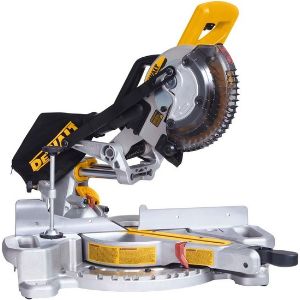
One standout feature is the integrated cut-line positioning system, which clearly shows where the blade will cut without requiring adjustments. The stainless-steel miter detent plate provides eleven positive stops, helping you make repeatable cuts for furniture, flooring, or trim.
Weighing just 30 pounds, this cordless miter saw is easy to transport between job sites and store in a workshop. Its oversized bevel scale and cam-lock miter handle also make angle adjustments straightforward.
However, its 7-1/4-inch blade and miter saw design limit its ability to cut large sheet materials. If you are looking for the best cordless track saw for ripping plywood or making long, straight cuts, a dedicated track saw with a guide rail is a better choice.
Pros
- Adjustment-free cut-line indication for accurate cuts.
- It has 11 positive meters for repeatable angles.
- Lightweight 30-pound design for portability.
- Oversized bevel scale and cam-lock handle for easy adjustments.
Con
- Not suitable for long, guided cuts through large sheet materials
2. Metabo HPT 10-Inch Compound Miter Saw:
The Metabo HPT 10-Inch Compound Miter Saw is another powerful cutting tool designed for woodworkers who need precision and portability. Although it is a corded miter saw rather than a cordless track saw, it provides an alternative for making accurate crosscuts and angled cuts in a workshop or on a job site.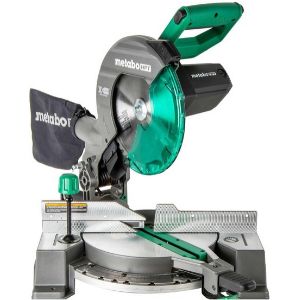
The unit is fitted with a 15-amp motor offering a no-load speed of up to 5,000 RPM, delivering the power needed to cut lumber, trim, and other woodworking materials. The enhanced miter scale and adjustable bevel stops make accurate, repeatable cuts easier.
One of its biggest advantages is its lightweight design. Weighing just 24 pounds, this compound miter saw is easy to transport and store. Its 0–52-degree miter range in both directions and 0–45-degree left bevel range also offer flexibility for different cutting applications.
However, this saw is not designed for long, straight cuts through large plywood sheets. If you’re looking for the best cordless track saw for cabinetmaking or sheet goods, a dedicated track saw with a guide rail is a better fit.
Pros
- Powerful 15-amp motor with a 5,000-RPM no-load speed.
- Wide miter range for versatile, angled cuts.
- Lightweight 24-pound design for easy transportation.
- Five-year warranty for added peace of mind.
Con
- Corded design limits portability compared with a cordless track saw.
3. Makita XPS02ZU 18V X2 LXT Lithium-Ion:
This design lets you work faster and more efficiently with the new technology, thanks to its auto-start wireless Bluetooth system that enables communication between the optional dust extractor and the tool.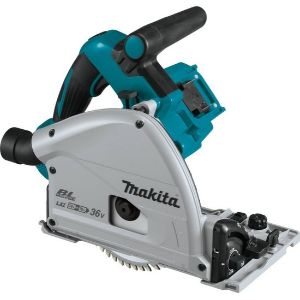
The machine is powered by two 5.0Ah LXT batteries, which power the brushless motor delivering 6300rpm. This combination delivers more power, improving performance and providing 50% longer fade-free run time per charge. On top of that, this machine can cut your 4 x 8 sheets of ½” plywood in up to 125 cuts per charge.
You can also easily adjust speed with the speed control dial from 2500-6300 rotations per minute for optimal performance. This machine also has a built-in depth stop that provides a first cut before cutting through your workpiece of 5/84″(2mm) to 7/64″(3mm) for immaculate and vibration-free cutting.
Its saw base and slide lever are designed to provide stability by engaging the optional guide rail during bevel cuts.
Pros
- It has an automatic speed change for adjusting speed and torque.
- You can perform close-to-wall cutting operations of up to 11/16”.
- It’s ideal for cutting other varieties of materials like melamine, aluminum, MDF and Corian.
- It comes with specific blades for optional materials.
Cons
- Batteries and optional blades aren’t included
4. DEWALT 20V MAX 7-1/4-Inch Cordless Miter Saw (DCS361M1)
If you plan to work longer hours or your project involves moving around the workshop, and you want a portable model, the DEWALT 20V MAX 7-1/4-Inch Cordless Miter Saw (DCS361M1) is your go-to option. This model is ideal when you need a track saw that delivers accurate cuts and can handle crosscuts and trim cuts on job sites.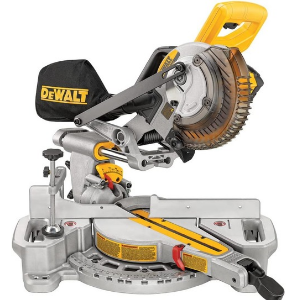
Powered by a 20V MAX battery, this cordless miter saw provides impressive cutting capacity in a compact package. According to the manufacturer, the included DCB204 battery offers an average of 183 cuts in 2×4 pine or 275 cuts in 3-1/4-inch pine baseboard per charge.
Moreover, the DCS361M1 model is integrated with a cut-line positioning system that indicates where the blade will cut without requiring adjustments. The stainless-steel miter detent plate has 11 positive stops, helping you make accurate and repeatable cuts.
Weighing approximately 31.6 pounds, this DEWALT cordless miter saw is easy to transport and store. Its oversized bevel scale and cam-lock miter handle also make angle adjustments straightforward.
Despite the merits, its 7-1/4-inch blade limits its cutting capacity compared with larger saws. If you’re searching for the best cordless track saw for ripping plywood or making long, straight cuts, a dedicated track saw with a guide rail is a better choice.
Pros
- Cordless 20V MAX design for portable cutting.
- Integrated cut-line system for accurate cuts.
- 11 positive miter stops for repeatable angles.
- Compact design for easy transportation and storage.
Cons
- Limited cutting capacity compared with larger miter saws and dedicated track saws.
5. Makita XPS01PTJ 36V (18V X2) LXT Brushless 6-1/2-Inch Plunge Circular Saw Kit
The Makita XPS01PTJ is a strong choice for anyone looking for the best cordless track saw for accurate sheet-goods cuts. Its 36V system runs on two 18V LXT batteries, providing cordless convenience without the restrictions of a power cord. The electronically controlled brushless motor reaches 6,300 RPM and is designed to provide up to 50% longer runtime per charge.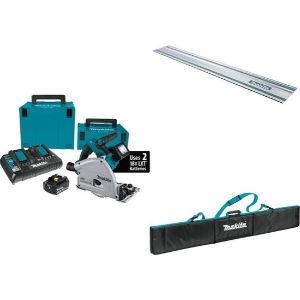
The included 55-inch guide rail works with the saw’s base to support smooth, straight cuts and bevel cuts. That makes this cordless track saw useful for breaking down plywood and other large panels with more control than a freehand circular saw. The kit also includes a padded rail bag made from durable, tear-resistant, water-repellent 1680D polyester, helping protect the guide rail during storage and transport.
For woodworking projects that demand clean, repeatable cuts, this track saw for woodworking provides a practical combination of power, precision and portability.
Pros
- Dual 18V batteries provide cordless 36V power
- Brushless motor delivers up to 6,300 RPM
- 55-inch guide rail supports straight and bevel cuts
- Protective rail bag helps with storage and transport
Cons
- Requires two compatible LXT batteries, adding to the kit’s weight and battery cost
6. Festool TS 75 EQ-F-Plus-FS Plunge Cut Circular Track Saw: Enhanced Safety
The Festool TS 75 EQ-F-Plus-FS is designed for precise, controlled cutting when paired with Festool guide rails. Its plunge-cut design helps you make clean, straight cuts in sheet materials, making it a strong option for anyone comparing the best cordless track saws for woodworking.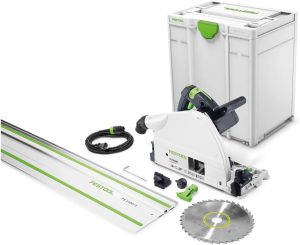
A spring-loaded riving knife keeps the kerf open as you cut, reducing the chance that the material will pinch the blade and cause kickback. Its slip clutch reduces kickback risk while limiting wear on the blade, gearbox, and motor, making it one of the safest models on the market. For maintenance, the FastFix system locks the switch and arbor together, making blade changes easier and safer.
If your priority is accurate panel cutting and safer, controlled plunge action, this track saw for woodworking is worth considering. However, its cord may make it less convenient than a battery-powered model when working away from an outlet.
Pros
- Produces straight, splinter-free cuts with compatible guide rails
- Spring-loaded riving knife helps reduce blade pinching and kickback
- Slip clutch helps protect the blade, gearbox, and motor
- FastFix system simplifies blade changes
Con
- Corded operation limits mobility compared with a cordless track saw
7. Makita XPS01Z 36V (18V X2) LXT Brushless 6-1/2-Inch Plunge Circular Saw
The Makita XPS01Z is a battery-powered plunge saw built for accurate panel cuts and woodworking in tight spaces. It uses two 18V LXT batteries to provide 36V performance without a cord; batteries are sold separately. Its electronically controlled brushless motor reaches 6,300 RPM and is designed to offer up to 50% longer runtime per charge.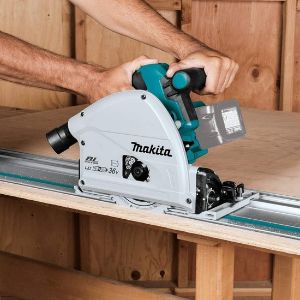
Automatic Speed Change technology adjusts speed and torque as you cut, while the variable-speed dial lets you select between 2,500 and 6,300 RPM for different materials. That flexibility makes this cordless track saw a useful option for cutting large wood panels and other wood materials with control. The included 6-1/2-inch, 55-tooth blade is suited to wood, MDF, and laminated materials.
For shoppers comparing the best cordless track saw options, the XPS01Z provides strong performance and adjustable cutting speed. Remember, it’s a bare-tool purchase, so you’ll need compatible batteries and a guide rail for guided cuts.
Pros
- Dual 18V LXT batteries provide cordless 36V power
- Brushless motor reaches up to 6,300 RPM
- Variable speed and automatic adjustment suit different materials
- Includes a 55-tooth blade for wood, MDF, and laminate
Cons
- Batteries and guide rail are not included
8. SEESII Cordless Reciprocating Saw with 2 × 4.0Ah
The SEESII cordless reciprocating saw is a lightweight cutting tool designed for home improvement, pruning, and general demolition tasks. It includes two 21V 4.0Ah batteries and a fast charger, helping you work longer while reducing recharge interruptions. Its 200W brushless motor provides speeds up to 3,500 RPM, while the 15mm stroke length helps it cut through materials such as wood, metal pipes, and branches.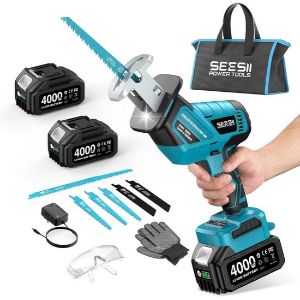
At just 2 pounds, this battery-powered reciprocating saw is easy to handle with one hand, especially in confined spaces. It also features a tool-free blade-change system, letting you switch between the six included blades without extra tools. A built-in LED light improves visibility in dim work areas, while the safety lock helps prevent accidental activation.
Although it is a useful addition to a cordless tool collection, this is not a track saw. It suits rough cutting, pruning, and demolition better than the precise, straight panel cuts expected from top cordless track saws.
Pros
- Includes two 21V 4.0Ah batteries and a fast charger
- Lightweight 2-pound design supports one-handed operation
- Tool-free blade changes make switching blades convenient
- LED work light and safety lock improve usability
Cons
- Reciprocating action is not suitable for the precise, straight cuts required in track-saw woodworking
9. WEN Cordless 6.5-Inch Track Saw
The WEN Cordless 6.5-Inch Track Saw is a genuine cordless track saw designed for straight cuts in boards and sheet materials. Its brushless motor runs on two WEN 20V Max batteries and provides variable speeds from 2,000 to 5,500 RPM. The saw can rip boards up to 2.25 inches thick and make 45-degree bevel cuts in material up to 1.65 inches thick.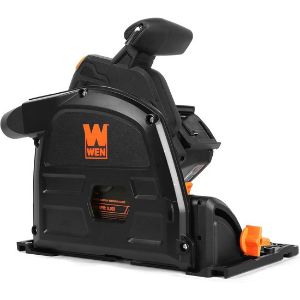
It works with WEN CT9502 and CT9110 tracks and CT992F track clamps. Track-alignment cams help the saw move along the rail, while the included 48-tooth carbide-tipped blade is suited to clean, controlled cuts. A dust-port adapter helps connect the saw to dust collection equipment.
For shoppers comparing the best cordless track saws, the WEN offers useful cutting capacity and variable speed. Keep in mind that batteries and charger are sold separately, and the saw requires two compatible batteries; WEN recommends at least two 4Ah batteries.
Pros
- Brushless motor with variable speed from 2,000 to 5,500 RPM
- Rips boards up to 2.25 inches thick
- Supports 45-degree bevel cuts up to 1.65 inches thick
- Includes a carbide-tipped blade, alignment cams, and dust-port adapter
Cons
- Requires two compatible batteries, which are sold separately
10. BOSCH GKS18V-25GN PROFACTOR 18V 7-1/4-Inch Circular Saw
The BOSCH GKS18V-25GN PROFACTOR is a powerful cordless circular saw designed for tough cuts. It features a BITURBO brushless motor and drivetrain to offer performance on par with high-output corded tools. It has a 2-1/2″ cutting depth and can cut through 2x material across its bevel range.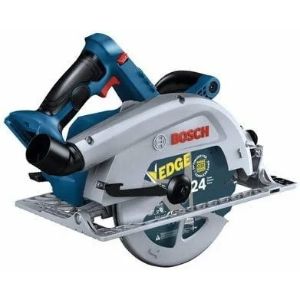
The saw has a 0–50-degree bevel capacity, front and rear locks to assist with angled cuts, and a one-touch depth adjustment to suit different materials. ECO mode can extend run time by up to 30%, and there’s an auxiliary handle to give you more control when beveling and when making rip cuts.
For those looking for the best cordless track saw alternatives, this one can make straight cuts when used with the appropriate Bosch or third-party track guidance systems. It’s a circular saw rather than a proper plunge track saw, so check rail compatibility before you buy.
Pros
- BITURBO brushless technology delivers high performance
- 2-1/2-inch capacity cuts through 2× material
- 0–50-degree bevel range supports angled cuts
- ECO mode can extend runtime by up to 30%
Cons
- Track-guidance compatibility may depend on the rail system used
Best Cordless Track Saw Buying Guide 2026
Choosing the best cordless track saw is more than comparing battery voltage and cutting speed. The saw you select should make accurate cuts, be appropriate for the materials you’re working with and be the one that suits your preferred guide rail system.
Use the buying guide below to compare key features and choose the saw that fits your projects and budget.
First, let us discuss some of the uses of cordless track saw models.
Uses of a Track Saw
Breaking Down Large Sheets
A track saw is ideal for cutting large sheets of plywood, MDF and all the other panel materials into smaller pieces. It’s much easier to work with a full sheet on a track saw than on a table saw, especially if you’re in a small workshop or on a job site.
With a track saw, you simply place the panel on a stable support, run the guide rail along the line you want to cut and guide the saw through. The rail keeps the cut straight and under control. It’s a very effective way to prepare panels for cabinets, shelves, furniture and more, with a much lower risk of inaccurate cuts.
Making Cabinet and Furniture Parts
Track saws are useful for getting accurate parts for cabinets, bookcases, desks and the like. You can use the models to cut panels to a consistent width and length, which is important when you’re making things that need to fit together.
A guide rail keeps the cut straight, and a good blade gives you a clean cut in plywood, MDF and laminated panels. They’re also useful for trimming panels down to their final size before assembly. The workpiece can stay on the bench or on a piece of foam board, so you don’t have to be as fiddly as you would be if you were trying to move a large panel across a table saw.
Trimming Doors and Worktops
A track saw can be used to cut solid core doors, wooden doors and worktops to size. It has a guide rail that helps keep the cut straight across the width of the material (important for a good finish).
Always measure carefully prior to cutting and ensure that the blade depth and rail position are correct. For laminated or finished work, use an appropriate blade and follow the manufacturer’s cutting guidance to help minimize chipping. It’s very useful when you have an item that’s too big or awkward to move to a stationary saw.
Cutting Bevels and Angled Edges
Many track saws can tilt the blade for bevel cuts, making them very useful for creating angled edges and fitted components. Bevel cuts are useful for sloped cabinet parts, decorative edges and joints where two pieces meet at an angle. The guide rail supports the saw’s movement and keeps the cut straight along the line you’re cutting.
Always check your saw’s maximum bevel angle and cutting depth before cutting, as the depth of cut is reduced when the blade is bevelled. As with any saw, the workpiece must be securely clamped, the bevel set accurately, and a test cut made on scrap material if you’re going to be relying on accuracy.
Creating Clean, Finished Edges
A track saw is useful when you need clean, accurate edges that don’t require much further trimming. The guide rail will keep the saw in line and the use of a sharp, suitable blade will minimize splintering on plywood, veneered panels and the like. This is particularly useful when making the visible sides of cabinets, furniture panels, shelves and worktops.
Some rails have a splinter guard, which helps support the panel surface right up to the blade. For best results, use the correct blade for the material, support the panel adequately and bring the saw up to full speed before you start cutting.
What to Consider When Choosing a Cordless Track Saw
The following features will help you compare the saws reviewed and choose the model best suited to your materials, working environment and cutting requirements.
Motor Power and Cutting Speed
A cordless track saw needs enough power to cut through the materials you use regularly. A brushless motor (as found in the Makita and WEN models we’ve looked at) will give you good performance and at the same time reduce the amount of brush wear.
Check the speed that the saw is rated at and see if that’s adequate for your work (plywood, MDF, thick boards).
A higher RPM will obviously help the blade cut, but again, that doesn’t necessarily mean a clean cut. Blade quality and the material being cut are equally important. A saw that slows down under load will give you a rough edge and take much longer to cut through. You need to pick a saw with the right power for your application rather than the one with the highest figure in the spec.
Battery Platform and Runtime
Battery capacity and platform compatibility will dictate how long you can go before you must stop and recharge. Some saws (the Makita XPS01 range, for example) use two 18V batteries to give you 36V of power; others are designed around a single battery.
A dual-battery system can be very capable but will, of course, require two compatible packs and, in most cases, increase ownership costs. You need to check whether the saw is sold as a kit or as a bare tool (the Makita XPS01Z and the WEN model reviewed are sold as bare tools and so require the batteries and charger to be purchased separately).
Runtime will also be dependent on the thickness of the material you’re cutting, the blade you’re using and the speed at which you’re cutting. If you’re regularly cutting full sheets and/or working away from an outlet, consider buying spare batteries so you can keep going while one charges.
Guide-Rail Compatibility and Length
The guide rail is vital to the track saw’s accuracy, so make sure the saw you’re looking at is compatible with the rail system you intend to use. The WEN model we’ve looked at is compatible with the specified WEN tracks and clamps; the Makita XPS01 kit comes with a 55″ rail.
A rail that’s too short may mean you have to reposition it during a long cut, which will disrupt your workflow and could lead to inaccuracies. A longer rail is better if you’re ripping large panels; a shorter rail is easier to store and move.
You also need to check whether the rail is included, sold separately or whether it’s compatible with accessories such as clamps and connectors. Getting the right saw with the right rail system is the key to making straight, repeatable cuts and avoiding any surprise costs down the track.
Cutting Depth and Blade Size
Cutting depth is the thickness of the workpiece the saw can cut in one pass. The WEN model in question can cut up to 2.25″ at 90 degrees and 1.65″ at a 45-degree bevel. Check that against the thickness of the panels, boards or worktops you expect to be cutting.
Blade diameter affects the available cutting depth; blade tooth count and design affect the finish. A fine-tooth blade helps produce a cleaner cut in plywood and laminated panels; a blade appropriate to the material helps minimize tear-out and improve cutting efficiency.
Check the maximum depth the saw can achieve with its guide rail, as the rail reduces the available depth compared to a freehand cut.
Variable Speed Control
Variable speed lets you adjust blade speed to suit the material and cutting conditions. The Makita XPS01Z under review has a speed dial from 2,500 to 6,300 rpm; the WEN is 2,000 to 5,500 rpm. The ability to vary speed can be very useful when working on a range of materials from different types of wood right through to finished panels.
The right speed can help minimize burning, give you better control and produce a cleaner cut, particularly with the right blade. Some saws will automatically vary both speed and torque as the load changes. If you’re doing a range of jobs, then you’ll want a saw with easy access to the speed controls and clear advice on what speed to use.
Bevel Capacity and Adjustment
Bevel capacity is the amount that the blade can be tilted to allow for angled cuts. It’s useful for fitting panels, making angled edges and for making angled joints in general. The WEN saw in question has a bevel capacity of 45 degrees, though at that angle its cutting depth is reduced.
You need to check both the maximum bevel that the saw will take and the depth available when the blade is bevelled. Clear scales and secure locks are both important for setting the angle correctly and holding it in place during the cut. If you’re likely to make bevel cuts, you’ll want a saw with bevel adjustments that are easy to access and lock securely.
For most panel breakdown work, a wide bevel range matters less than rail accuracy and cutting depth.
Safety and Cut-Control Features
A good track saw will cut steadily and controllably, particularly when making long cuts in large sheets. A range of features can help provide that control, including a riving knife, slip clutch, good rail fit and reliable depth adjustment.
The Festool TS 75 under review has a spring-loaded riving knife that helps keep the kerf open and minimizes the risk of the material pinching the blade. It has a slip clutch which is designed to limit kickbacks and reduce wear.
Look out for clear plunge controls, a good grip and a dust port which can be linked to an extractor. An extractor is a big help for keeping the cut line visible and minimizing cleanup. Always check the manufacturer’s safety instructions and use appropriate workpiece support, eye protection and hearing protection.
How Does a Track Saw Work?
A track saw works much like a circular saw, but it’s guided along a straight rail. The rail sits on the workpiece and aligns with the cut you want to make. It has a grippy underside that helps hold it in place and the base of the saw fits onto the rail to ensure the blade travels in a straight line.
When you start the motor, the blade spins and cuts as you guide the saw along the rail. On a plunge model, you lower the blade down into the material at the cut line, and you can then start the cut well away from the edge. You can set the cutting depth, and on models with bevel adjustment, you can also bevel the blade for angled cuts.
The guide rail helps produce a clean cut and reduces splintering if you have the right blade and splinter guard. That makes a cordless track saw a very useful tool for cutting through plywood, trimming panels and preparing parts for cabinets and furniture. A good cordless track saw will have reliable power, a compatible guide rail and enough battery life for the job at hand.
Before you cut, secure the workpiece, check that the rail and blade are set correctly and follow the manufacturer’s safety instructions. Good support and a steady feed will see the saw make a clean, controlled cut.
The video below demonstrates how to set up and use a track saw
Frequently Asked Questions-FAQs
- What is a cordless track saw used for?
A cordless track saw is ideal for making clean, accurate straight cuts in sheet goods and boards (plywood, MDF, solid wood). It’s very useful for cutting down large panels, trimming doors and worktops and preparing parts for cabinets and the like.
The guide rail will keep the saw on a straight line, and with the right blade and splinter guard, you can minimize chipping on the finished surface.
- Is a track saw better than a circular saw?
A track saw is generally the better option when you’re making long, accurate cuts and you need a clean edge (e.g. cutting cabinet panels, finished ply).
A normal circular saw is often quicker for rough cuts and general construction work. You can guide a circular saw with a straightedge, but a track saw is designed to run along its rail and make the same cut repeatedly with minimal setup.
- Can a cordless track saw cut through thick wood?
Yes, as long as it’s within the maximum cut depth. Cutting capacity varies by model, blade size and bevel; a saw will generally cut less deep when the blade is bevelled.
Always check the manufacturer’s specs before attempting to cut a thick board and use the appropriate blade for the material. Don’t force the saw through a cut if it’s slowing down or binding.
- Do all track saws use the same guide rails?
No. Rail compatibility is going to vary from manufacturer to manufacturer and model to model, so you need to check the specs of the saw before you go and buy a rail or indeed connect it to one that you already have.
Some rails from one manufacturer may be compatible with rails from another, but the accessories (connectors, clamps, splinter guards) may well be different. Using a compatible rail will, of course, ensure the saw runs smoothly and tracks the cut line you intend.
- Is a dust extractor necessary when using a track saw?
A dust extractor isn’t strictly necessary to run a track saw, but it can make cutting much cleaner and easier to manage. Many track saws have a dust port which will take a suitable extractor, and this will help to suck up the sawdust and keep the cut line in view. Always follow the tool’s instructions for dust collection and, of course, wear the appropriate eye and respiratory protection when cutting.
Conclusion
The key to getting the best cordless track saw is finding the right mix of cutting power, battery life, depth capacity and guide rail compatibility. A good saw lets you make clean, accurate cuts in plywood, MDF and other materials without a power cord.
Consider the type of work you do, whether you need batteries and rails included, and which safety and speed controls matter most. Compare these factors before you buy and choose a saw that fits your workshop, budget and cutting needs.
With the right saw you can work efficiently and achieve a professional finish.